


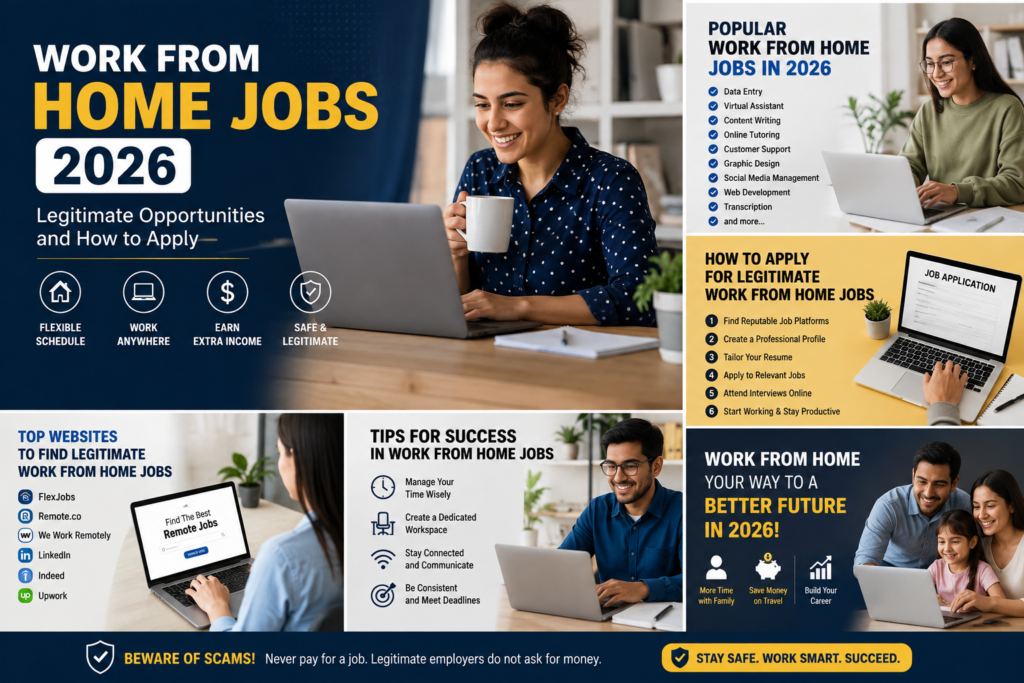
Remote work has solidified as a permanent fixture of the modern labor market in 2026. What began as a pandemic-era necessity evolved into a structural shift, with millions of professionals worldwide performing knowledge work, customer support, creative tasks, technical roles, and specialized services from home offices, co-working spaces, or while traveling. Fully remote job postings continued to grow through 2026—FlexJobs data showed a 22% quarter-over-quarter increase in Q2—driven by employer demand for talent regardless of geography, cost efficiencies, and employee preferences for flexibility. Project management, computer and IT, sales, operations, and communications remained among the highest-volume categories, while sales, business development, and account management posted some of the strongest growth rates (around 35% in the first half of the year in some analyses).
Legitimate work-from-home (WFH) opportunities exist across experience levels, industries, and pay scales. They range from entry-level customer support and virtual assistance paying $18–$35 per hour to six-figure roles in software engineering, AI/ML, product management, sales, and specialized healthcare or finance positions. The key is distinguishing real employers from scams, targeting the right platforms, and presenting yourself as a strong remote candidate. This guide covers the current landscape of legitimate opportunities in 2026, specific roles and pay ranges drawn from market data, companies that maintain remote-friendly policies, practical steps to apply, and strategies to avoid fraud.
The State of Remote Work in 2026
Remote work participation has stabilized at levels far above pre-2020 baselines. Technology, finance and insurance (certain functions), marketing and media, professional services, and parts of healthcare administration show the highest remote adoption. Roles that rely primarily on computers, digital collaboration tools, data analysis, writing, coding, or customer communication over phone/chat/video are the most portable. In contrast, hands-on clinical care, manufacturing, construction, and most retail or food service remain location-bound.
Employers have matured in their remote practices. Many remote-first companies (GitLab, Automattic, Zapier, Buffer, Doist, and others) operate fully distributed teams across dozens of countries. Traditional firms have retained permanent remote or hybrid policies for specific functions even after some return-to-office mandates elsewhere. Compensation for U.S.-based remote talent in high-demand technical and sales roles often remains competitive with or exceeds on-site equivalents, though some companies apply geographic pay adjustments for international hires. High-paying remote openings cluster in experienced technical, product, sales leadership, and specialized analytical roles, with medians frequently exceeding $100,000 and top-end packages reaching $200,000–$400,000+ for staff/principal engineers, engineering managers, AI specialists, and senior sales roles at well-funded companies.
Demand is strongest for candidates who demonstrate self-management, clear written and verbal communication, proficiency with collaboration tools (Slack, Zoom, Notion, Asana, Google Workspace, Microsoft 365, etc.), and relevant technical or domain skills. AI-related capabilities—prompt engineering, data annotation/labeling, AI integration, chatbot development, and AI-assisted content or video work—have seen particularly rapid growth in freelance and full-time remote demand.
Legitimate Categories of Work-From-Home Jobs
Legitimate WFH roles fall into several broad categories. Below are major ones with representative examples, approximate 2026 pay ranges (U.S.-centric where specified; actual offers vary by experience, company, location, and negotiation), typical requirements, and notes on accessibility.
Customer Service, Support, and Success These remain among the largest volume categories and one of the most accessible entry points.
- Customer Service Representative / Chat Support / Non-Phone Support: $18–$30+ per hour. Major employers and BPOs hire for phone, chat, or email support. Requires clear communication, problem-solving, and a quiet workspace with reliable internet. Often includes equipment or software provided.
- Customer Success Manager: $75,000–$130,000+. Focuses on retention, onboarding, and relationship management for SaaS or service clients. Benefits from prior customer-facing or account experience.
- Technical Support / Happiness Engineer-style roles: Higher pay for product-specific knowledge (e.g., software platforms). Some worldwide-open roles exist at companies like Automattic.
Virtual Assistance and Administrative Support
- Virtual Assistant / Executive Assistant / Personal Assistant: $20–$40+ per hour (freelance often higher for specialists). Tasks include calendar management, email, research, travel booking, social media scheduling, and light bookkeeping. Strong organizational skills and tool proficiency are essential. Platforms and direct business clients hire extensively.
- Administrative roles, data entry (legitimate versions at established companies), and operations coordinators: Variable pay, often $18–$30+ per hour or salaried equivalents. Pure “data entry from home” listings are frequently scams; real ones come through reputable companies or vetted boards.
Sales, Business Development, and Account Management These categories showed some of the strongest remote hiring growth in 2026.
- Account Executive / Sales Development Representative / Business Development Representative: Base salaries often $60,000–$120,000+ with commissions pushing total compensation (OTE) well into six figures for strong performers. Requires persuasion skills, CRM familiarity (Salesforce common), and resilience.
- Sales Manager / Regional or Enterprise roles: Higher base and OTE. These roles suit people with experience persuading, negotiating, or managing client relationships.
Technology, Engineering, and Data The largest concentration of high-paying fully remote roles.
- Software Engineer / Full-Stack / Backend / Frontend / Mobile: $100,000–$220,000+ (senior/staff/principal significantly higher, sometimes $200,000–$400,000+ at top companies). Strong demand; remote-first tech companies and many traditional firms hire.
- DevOps / Site Reliability / Cloud Engineer: $120,000–$200,000+.
- Data Scientist / Data Engineer / Analyst: $100,000–$200,000+ depending on seniority.
- AI / Machine Learning Engineer: Among the fastest-growing; $130,000–$250,000+ common.
- Product Manager / Technical Product Manager: $100,000–$180,000+. Requirements typically include relevant experience or strong portfolio/GitHub for engineers, plus demonstrated remote collaboration ability.
Marketing, Content, and Creative
- Digital Marketer / SEO / Content Marketer / Social Media Manager / Product Marketing Manager: $60,000–$130,000+.
- Content Writer / Copywriter / Technical Writer: Project or salaried rates vary widely; experienced specialists command premium rates.
- UX / Product Designer: Competitive remote salaries, often six figures for mid-to-senior levels. AI-assisted creative and video skills are increasingly valued.
Finance, Accounting, Project Management, and Operations
- Accountant / Financial Analyst / Bookkeeper: $60,000–$120,000+; remote options common for certain functions.
- Project Manager / Scrum Master: High volume of postings; $80,000–$130,000+.
- Operations and business development roles also grew strongly.
Healthcare, Education, and Specialized Support
- Online Tutoring / ESL Teaching: Flexible, often part-time; pay varies by platform and subject (bachelor’s degree commonly required for many platforms).
- Medical Coding / Billing / Healthcare Support / Telehealth-related administrative or counseling support roles.
- Nurse practitioners or certain mental health counselors in telehealth models can reach high compensation where regulations allow.
- Search engine evaluation, AI training / data annotation / content review: Flexible contractor roles, often $15–$35 per hour depending on complexity and client.
Freelance and Gig Extensions Platforms like Upwork support many of the above as independent contractor work. Specialized freelancers in AI-related services, development, design, writing, and consulting can earn high hourly rates once established.
Pay ranges are approximate medians or common ranges from market analyses and listings in 2026; actual offers depend on experience, location (U.S. rates often higher), company size, and negotiation. Six-figure remote roles are concentrated in experienced technical, sales leadership, product, and specialized professional positions. Entry-level and mid-level support roles provide accessible starting points with pathways to higher pay through skill-building and internal mobility.
Companies Known for Permanent or Strong Remote Opportunities
A number of organizations maintain fully remote or highly flexible policies. Examples frequently cited in 2026 analyses and job boards include remote-first firms such as GitLab, Automattic (WordPress.com, WooCommerce), Zapier, Buffer, Doist, and others that hire globally or with broad location flexibility. Larger or traditional companies with significant remote hiring include various healthcare, insurance (e.g., Allstate in some analyses), technology, consulting, and services firms. Thermo Fisher Scientific, Apex Systems, General Dynamics, and others ranked high in volume of remote postings in mid-2026 FlexJobs data. Always verify current policy on the company’s official careers page, as policies can evolve.
Direct application via company career sites is often the safest and most effective route for these employers.
How to Find Legitimate Work-From-Home Jobs
Start with platforms that emphasize verification or focus exclusively on remote roles:
- FlexJobs: Manually screens listings; subscription-based but highly regarded for legitimacy.
- We Work Remotely, Remote OK, Remote.co, Himalayas, Dynamite Jobs, and similar curated remote boards.
- LinkedIn Jobs (use “Remote” filter and verify company profiles).
- Company career pages of target employers.
- Indeed, with careful filtering and independent verification of every listing.
- For freelancing: Upwork (with its protections), and specialized platforms.
- Niche boards for tech (Stack Overflow Jobs alternatives, Arc.dev, Wellfound), healthcare, or other fields.
Search using precise terms: “remote,” “work from home,” “fully remote,” “work from anywhere,” combined with the job title. Set alerts. Review Glassdoor, LinkedIn employee lists, and the company’s own site for consistency. Prefer listings that name the company, describe real responsibilities, list reasonable requirements, and provide a professional application process (often via an applicant tracking system or official form).
How to Apply Successfully
- Optimize your materials for remote work. Tailor your resume and LinkedIn profile to highlight remote-relevant strengths: self-motivation, asynchronous communication, tool proficiency, results achieved independently or in distributed teams, and any prior remote or hybrid experience. Quantify achievements. For technical roles, maintain an updated portfolio or GitHub. For writing or creative roles, prepare samples.
- Research the company and role thoroughly. Understand the product/service, culture (especially remote culture indicators), and recent news. Customize your cover letter or application answers to show genuine interest and fit.
- Apply strategically. Quality over pure volume. Prioritize roles that match your skills closely. Apply through official channels. For competitive roles, network via LinkedIn connections at the company when appropriate and professional.
- Prepare for remote interviews. Expect video interviews (Zoom, Google Meet, etc.). Test your setup: good lighting, clear audio, stable internet, professional background. Practice answering behavioral questions with STAR method examples that demonstrate remote-friendly traits (ownership, communication clarity, time management). Be ready to discuss your home office setup and how you stay productive and collaborative remotely.
- Follow up professionally. After interviews, send concise thank-you notes reiterating interest and key fit points.
- Negotiate thoughtfully. Research market rates for the role and your experience level. Consider total compensation (salary, benefits, equipment stipend, professional development, flexibility).
Building skills that match 2026 demand improves outcomes: advanced tool proficiency, AI literacy, data skills, specialized domain knowledge, strong writing, and sales or project management capabilities. Free or low-cost learning resources, certifications, and portfolio projects help bridge gaps.
Avoiding Scams: Critical Red Flags and Verification Steps
Work-from-home scams remain prevalent. Common tactics include unrealistic pay for minimal work (“$300/day, no experience”), requests for upfront payment for training/equipment/background checks, vague or copy-pasted descriptions, pressure to move communication to WhatsApp/Telegram/email only, requests for sensitive personal or financial information before a formal offer, and fake “check deposit” or reshipping schemes.
Never pay money to get a job. Legitimate employers do not charge applicants for the opportunity to work.
Verification process before investing significant time or sharing sensitive data:
- Confirm the company has a professional website, real product or service, and verifiable employees on LinkedIn.
- Ensure the email domain matches the official company domain (not a close lookalike).
- Cross-check the job on the company’s official careers page.
- Search “[company name] scam” or reviews.
- Prefer video interviews over text-only processes.
- Legitimate processes include structured interviews, sometimes skills assessments, and formal offer letters/contracts before requesting Social Security numbers, bank details, or extensive personal data for onboarding.
Report suspicious listings to the platform and relevant authorities (e.g., FTC, FBI resources on employment scams). Use curated boards to reduce exposure.
Practical Considerations for Success in Remote Roles
A reliable high-speed internet connection, suitable computer, quiet dedicated workspace, and basic ergonomics are foundational. Many employers provide or reimburse equipment. Soft skills matter as much as technical ones: proactive communication, documentation habits, time-zone awareness, and the ability to work independently while remaining available for collaboration.
Track applications, set daily goals for job searching (applications, networking, skill practice), and maintain resilience—remote hiring can be competitive, especially for high-paying roles. Entry points in customer support, virtual assistance, tutoring, or junior technical/support roles can lead to internal advancement or stronger resumes for higher-level positions.
Freelance or contract work can serve as a bridge, building experience, income, and client relationships while pursuing full-time roles. Always clarify employment status (W-2 employee vs. 1099 contractor), tax implications, and benefits.
Building Long-Term Remote Career Resilience
The 2026 market rewards continuous learning. AI tools are changing workflows across writing, coding, analysis, customer support, and design—professionals who use them productively while delivering higher-value judgment, creativity, relationship skills, and domain expertise remain in demand. Specialization (particular tech stacks, industries, or platforms) combined with strong remote work habits creates durable advantages.
Geographic flexibility is a major benefit for many roles, though some positions restrict hiring to specific countries or states for legal, tax, or compliance reasons. Always check eligibility carefully.
In summary, legitimate work-from-home jobs in 2026 span accessible support roles to highly compensated technical, sales, and professional positions. Growth continues in key categories, supported by mature remote infrastructure at many employers. Success depends on targeting verified opportunities through reputable channels and company sites, preparing materials that emphasize remote strengths, applying with intention, verifying every opportunity rigorously, and continuously developing relevant skills. By focusing on real employers, realistic expectations, and professional processes, job seekers can secure flexible, sustainable remote work that fits their lives and career goals.
The landscape rewards preparation and caution in equal measure. With the right approach, remote work remains one of the most significant expansions of opportunity in the contemporary labor market.
Disclaimer: Job information is provided for general awareness only. Always verify employers, vacancies, eligibility, and application details through official sources. We do not guarantee employment and are not responsible for losses from fraudulent job offers.