
New Delhi / Global Markets | September 8, 2026
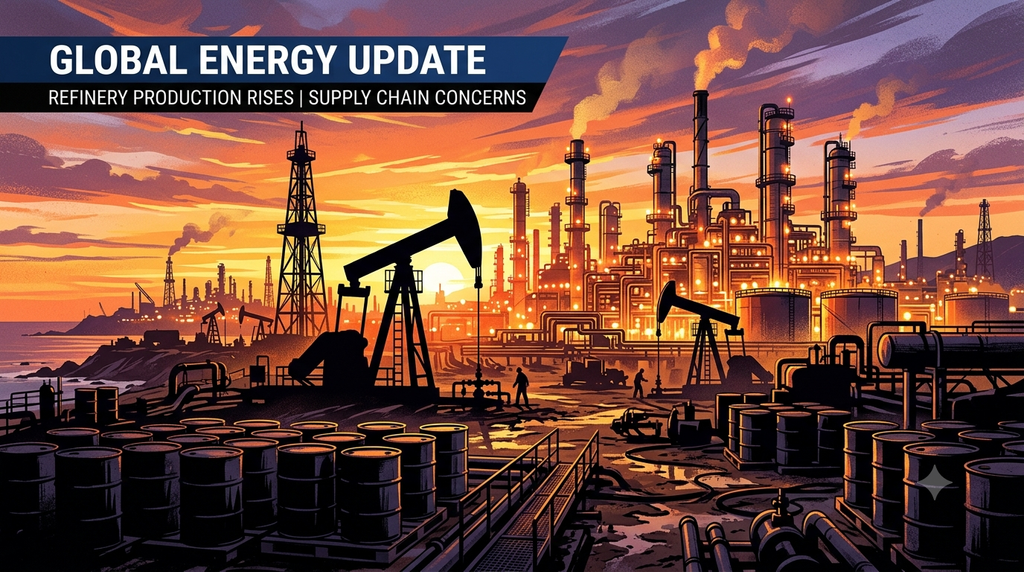
Brent crude oil, the international benchmark, traded near the psychologically critical $100-a-barrel mark on Tuesday, climbing as high as approximately $99.2 in early European trading before hovering in the high $97–$98 range through the session. West Texas Intermediate (WTI) rose toward $94–$94.5. The surge marked six-week highs and reversed much of the earlier decline that had followed temporary hopes of de-escalation in the long-running US–Iran conflict.
The latest climb was driven by a combination of factors: renewed mutual threats between Washington and Tehran, Iranian claims of firing advanced missiles at US warships and threats of “economic warfare,” fresh Houthi attacks on Saudi energy infrastructure including the Jazan (Jizan) refinery with its 400,000-barrel-per-day capacity, and Iranian statements about establishing a new shipping corridor in the Strait of Hormuz that could further complicate tanker traffic. The US–Iran confrontation, now in its seventh month since the initial strikes in late February 2026, continues to constrain oil flows through the vital waterway that normally carries about one-fifth of global oil supplies.
Analysts noted that peace hopes have faded, with speculators increasing net long positions in Brent. Reports indicated that Saudi Aramco facilities faced disruptions, with some operations temporarily halted after the attacks that also wounded dozens of people. Iran’s warnings and the tit-for-tat nature of recent strikes—including earlier US actions against Iranian oil tankers—have kept a significant geopolitical risk premium embedded in prices.
Background: Seven Months of Conflict and Persistent Supply Constraints
The conflict began with US and Israeli actions against Iran in February 2026, followed by Iranian responses that severely disrupted traffic through the Strait of Hormuz. Pre-war, more than 100 ships often transited daily; wartime averages have fallen dramatically at times to single digits or low teens, though some flows have continued at reduced levels—recent reports cited around 7 million barrels per day of crude and products still moving in certain periods, far below normal.
Earlier ceasefire frameworks and memoranda of understanding produced temporary reopenings and price retreats, but these proved fragile. By mid-2026, after roughly six months, oil was trading with a persistent premium even as markets adapted somewhat through alternative routes, pipeline maximisation by Gulf producers, and inventory draws. Prices had peaked above $120 earlier in the crisis before moderating, only to reaccelerate toward $100 as hostilities resumed and peace prospects dimmed.
Houthi attacks, often linked to Iranian support, have repeatedly targeted Saudi facilities. The latest strikes on southern Saudi energy sites added immediate supply-side anxiety. Simultaneously, Iranian rhetoric about controlling or reconfiguring Hormuz shipping, combined with US naval presence and strikes, has maintained high insurance premiums, war-risk costs, and operational caution among tanker operators. Analysts from firms such as ANZ have projected that full pre-war throughput may not return until late Q1 or early Q2 2027 under prolonged calibrated confrontation scenarios.
Goldman Sachs and others have flagged upside risks to $120 if shipping attacks broaden and intensify. JPMorgan estimates have suggested that each additional month of significant disruption could add $7–$8 per barrel. OPEC+ has held production targets steady in recent decisions, limited in its ability to fully compensate amid the regional constraints.
Global Fuel Price Transmission
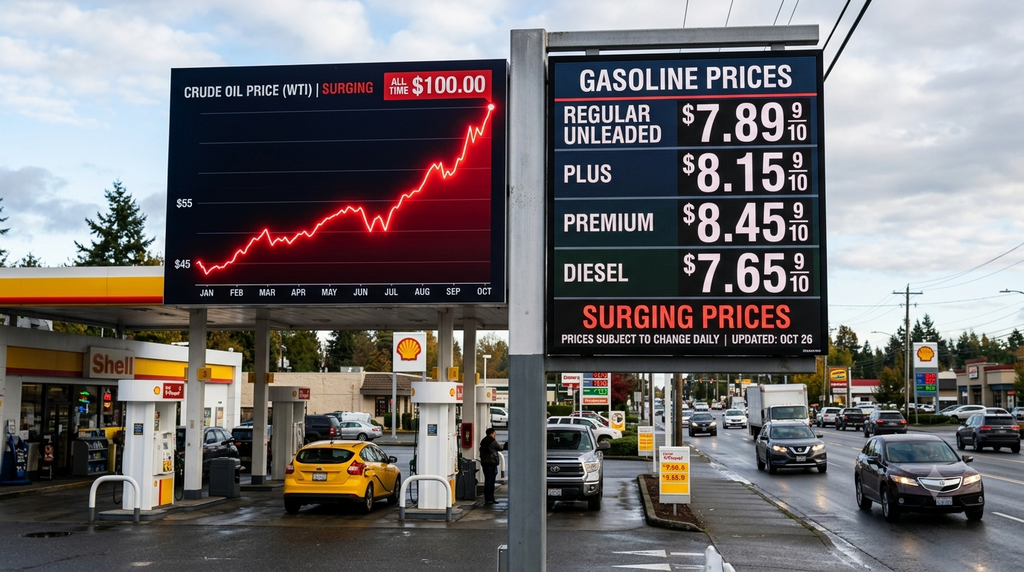
Higher crude prices rapidly feed into refined products. In the United States, gasoline prices have risen above $4 per gallon, hitting record levels around Labour Day in some assessments, with national averages climbing several cents in recent weeks. Diesel and heating oil have also strengthened, with wholesale diesel sometimes trading at large premiums to crude. European and Asian product markets have felt similar pressure, compounded by any residual LNG and refined product flow disruptions from the Gulf.
The broader economic implications include renewed inflation concerns. Higher energy costs raise transportation, manufacturing, and consumer price indices. Central banks already navigating post-pandemic and earlier conflict-related inflation face added complexity; some commentary has linked elevated oil to potential interest-rate path adjustments. Equity markets in various regions have shown sensitivity, with energy stocks gaining while broader indices faced pressure from the inflation and growth outlook.
Supply-side adaptations have occurred—China’s higher imports enabling refined product exports, maximised use of bypass pipelines, and strategic reserve management—but inventories have been drawn down, limiting buffers. The “illusion of abundance” has faded according to some commodity veterans, with normalisation of Hormuz flows viewed as optimistic in the near term.
India’s Exposure and Response
India, the world’s third-largest oil importer and consumer, imports roughly 85–90 per cent of its crude requirements. A substantial share has historically moved through or been influenced by Middle East dynamics and Hormuz. The country also relies heavily on the region for LPG (a large portion of household cooking fuel) and a significant share of LNG.
During the initial sharp phase of the crisis, India’s crude basket surged dramatically—from the low $70s toward peaks above $110–$120 in some months—driving a sharp rise in the import bill. April–July 2026 data showed the crude import bill jumping over 56 per cent year-on-year to around $63.4 billion in one reported period. Every sustained $1-per-barrel increase can add roughly up to $2 billion annually to the import bill at typical volumes of 1.8–2 billion barrels.
A Centre for Research on Energy and Clean Air (CREA) analysis estimated that India incurred approximately $22 billion in gross additional fossil-fuel import costs (crude, products, LNG) between March and August 2026 relative to pre-war futures expectations, ranking high among major importers after the EU and China. Net additional costs were estimated lower after accounting for any offsetting factors, around $14.4 billion or roughly 0.38 per cent of GDP. Crude alone accounted for the bulk of the extra burden. LPG import costs also rose, with volumes sometimes constrained and prices elevated.
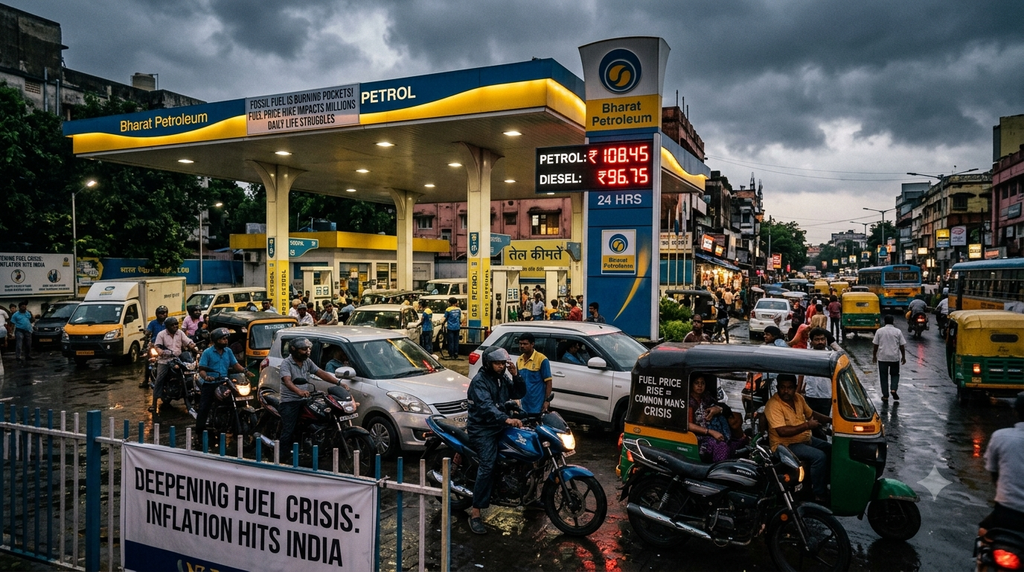
Despite these pressures, India largely avoided acute fuel shortages at the retail level through a multi-pronged strategy. The government and public-sector oil marketing companies (OMCs—IOCL, BPCL, HPCL) absorbed significant under-recoveries for extended periods, freezing or limiting retail price pass-through. Excise duty reductions provided fiscal support. Refineries were directed to maximise LPG output, boosting domestic production substantially in the early crisis weeks. Diversified sourcing, inventory draws (maintaining roughly two months of cover across crude, products, and LNG in some assessments), and diversion of cargoes helped maintain supplies.
Retail prices did eventually rise in stages. By May 2026, after months of absorption, OMCs implemented successive hikes totalling several rupees per litre. As of September 8, 2026, prices remained largely stable at the elevated post-May levels: petrol in Delhi around ₹102.12 per litre, diesel ₹95.20; Mumbai petrol near ₹111, diesel around ₹98; with variations across states reflecting VAT and other local components. These levels are higher than pre-conflict benchmarks but have been held steady even as global crude reaccelerated toward $100, illustrating continued buffering capacity—or residual under-recovery risk for OMCs.
The Indian crude basket has reflected the global rebound, with recent averages moving higher (September figures cited near or above $100 in some reports). Higher landed costs pressure the current account, the rupee, and inflation (both CPI and the more sensitive WPI fuel components). Fertiliser and industrial feedstock costs can also rise, with secondary effects on agriculture and manufacturing. Aviation turbine fuel and logistics costs face upward pressure.
Macroeconomic and Policy Implications for India
The elevated oil price environment complicates India’s growth-inflation trade-off. Strong earlier growth (full-year figures in some periods exceeding forecasts) and manufacturing expansion provided resilience, but sustained high prices risk widening the current account deficit, pressuring foreign exchange reserves (still substantial but tested), and feeding into broader inflation. Corporate margins, particularly for energy-intensive sectors and OMCs, face volatility. Fiscal costs of any continued subsidies or duty cuts compete with other priorities.
India has reduced its relative Hormuz dependence over time through diversified suppliers (including Russia and others) and strategic reserves, yet the residual exposure remains material. Policy responses have emphasised supply security: inventory management, production flexibility, diplomatic engagement for alternative routes, and acceleration of domestic exploration, renewables, and efficiency measures as longer-term buffers. Clean energy expansion has already mitigated some of the fossil import burden relative to a counterfactual without it.
Looking ahead, analysts warn that if the US–Iran standoff persists in a “calibrated but prolonged” form, India’s crude basket could remain elevated, raising import bills and inflation risks. A further spike toward or beyond $110–$120 would intensify these pressures and likely force additional retail price adjustments or deeper fiscal support. Conversely, any durable diplomatic breakthrough that restores Hormuz throughput more fully could allow prices to ease, relieving the burden.
Broader Global Context and Outlook

Markets are pricing a scenario of constrained Gulf supply lasting into 2027 rather than a swift normalisation. Speculative positioning has turned more bullish. Product cracks, particularly for diesel, remain elevated in some regions. Downstream effects include higher costs for chemicals, plastics, fertilisers, and transportation-dependent industries worldwide.
For major consumers in Asia and Europe, the combination of higher crude, elevated freight and insurance, and potential secondary sanctions or shipping complications creates a multi-layered cost shock. Producing nations outside the immediate conflict zone benefit from higher revenues, while importers face terms-of-trade deterioration.
Risks remain two-sided. Escalation—broader attacks on shipping, energy infrastructure, or direct military intensification—could drive prices significantly higher and trigger more severe shortages. De-escalation or effective alternative logistics could moderate the premium. OPEC+ capacity, US shale responsiveness, and Chinese demand trends will interact with the geopolitical overlay.
In India, the focus remains on balancing consumer protection, OMC financial health, fiscal prudence, and energy security. Retail prices have so far been managed to avoid the sharp spikes seen in some other countries, but the cumulative cost of absorption and the rising global benchmark leave limited room if the current near-$100 environment persists or worsens.
As of September 8, 2026, oil markets are once again staring at the $100 threshold, a level that concentrates minds from Washington and Tehran to New Delhi, Beijing, and European capitals. The path of US–Iran tensions and the security of Middle Eastern energy infrastructure and shipping lanes will continue to exert outsized influence on global fuel prices and on the economic calculations of major importers such as India for months to come. Policymakers, refiners, and consumers alike are watching the next developments in the Gulf closely, knowing that the margin for further disruption is thin and the costs already substantial.