

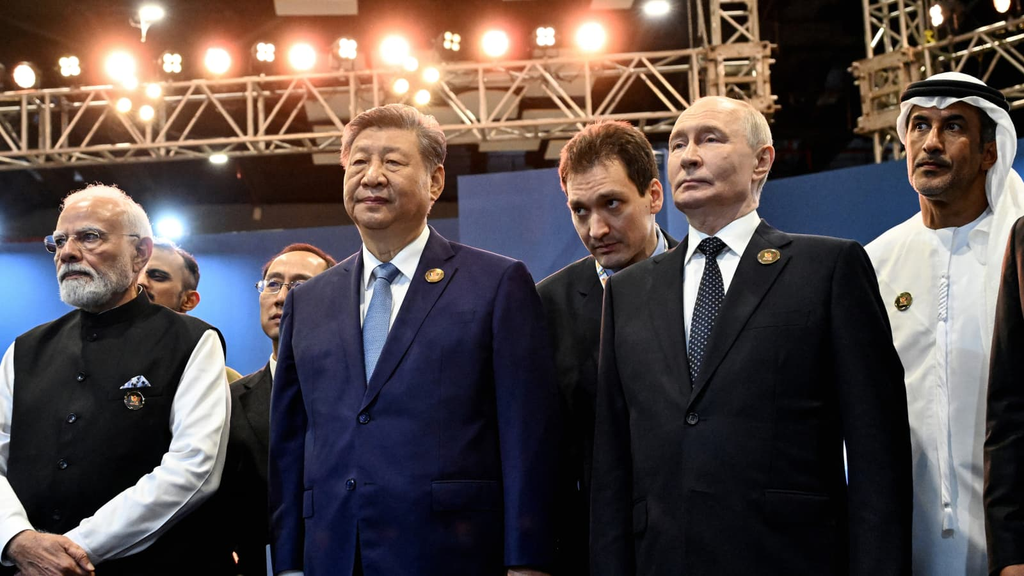
New Delhi, September 12, 2026 — In a striking display of diplomatic cohesion under India’s chairmanship, the 18th BRICS Summit concluded its opening day at Bharat Mandapam with the unanimous adoption of the New Delhi Declaration. Titled “Building for Resilience, Innovation, Cooperation and Sustainability,” the expansive 140-point document emerged after intensive overnight negotiations that bridged sharp differences among the expanded 11-member grouping. Prime Minister Narendra Modi announced the consensus to a hall that included Chinese President Xi Jinping, Russian President Vladimir Putin, Iranian President Masoud Pezeshkian, South African President Cyril Ramaphosa, and Abu Dhabi Crown Prince Sheikh Khaled bin Mohamed bin Zayed Al Nahyan, among others. “No member has raised any objection. The New Delhi Declaration 2026 is adopted unanimously,” Modi declared, framing the outcome as evidence that BRICS had come of age after two decades.
The summit, held September 12–13 under India’s fourth chairmanship, marks the 20th anniversary of the grouping’s formal establishment. Originally Brazil, Russia, India, China and South Africa, BRICS now includes Egypt, Ethiopia, Iran, Indonesia, Saudi Arabia and the UAE. The New Delhi gathering took place against a backdrop of escalating tensions in West Asia — including ongoing hostilities involving Iran, disruptions in the Strait of Hormuz and Red Sea shipping, Houthi advances, and lingering Gaza-related violence — alongside the protracted Russia-Ukraine conflict, unilateral tariff measures, and debates over global institutional reform. India’s ability to secure consensus, despite earlier failures by foreign ministers in May to issue joint statements due to Iran-UAE divergences, is being widely viewed as a significant diplomatic achievement.
The New Delhi Declaration: Core Positions and Major Decisions
The declaration reaffirms the BRICS spirit of mutual respect, sovereign equality, solidarity, democracy, openness, inclusiveness, collaboration and consensus. It commits members to strengthening cooperation across political-security, economic-financial, and cultural-people-to-people pillars while advancing a more representative, fairer international order and reformed multilateral system.
On global governance, leaders reiterated the urgent need for comprehensive United Nations reform, including the Security Council, to make it more democratic, representative, effective and efficient. Greater representation for developing countries from Africa, Asia and Latin America is essential so the Council can address contemporary challenges. China and Russia, as permanent members, explicitly reiterated support for the aspirations of Brazil and India to play a greater role in the UN, including the Security Council. The document notes the ongoing selection of the next UN Secretary-General and observes that no woman has ever held the post, while representation from Latin America, Africa and Asia has been limited. It calls for equitable geographical representation in UN secretariats and senior positions, greater roles for women from emerging markets and developing economies (EMDEs), and opposes unilateral efforts to undermine multilateral institutions by withholding assessed contributions.
Reform of the Bretton Woods Institutions features prominently. BRICS demands that the IMF and World Bank become more agile, effective, credible, inclusive and representative to reflect the transformation of the global economy. Quota and voting shares of EMDEs must increase to match their relative economic weight, without coming at the expense of the poorest members. Leaders urged prompt implementation of the 16th General Review of Quotas and meaningful realignment under the 17th, guided by principles that protect developing countries. Leadership selection at these institutions should be merit-based, transparent and inclusive, increasing regional diversity.
Trade and economic cooperation form another pillar. The declaration opposes unilateral tariffs, non-tariff barriers and protectionist measures that disrupt global trade, supply chains and economic certainty. It specifically criticises carbon border adjustment mechanisms (CBAMs) when applied in unilateral, punitive, discriminatory or protectionist ways inconsistent with international law. BRICS supports restoring the WTO’s dispute settlement system, including the Appellate Body, and backs the accession bids of Ethiopia and Iran. Leaders endorsed continued work on practical solutions for faster, lower-cost, efficient cross-border payments and greater use of local currencies for trade settlements and investments, while acknowledging there is no one-size-fits-all approach. A BRICS Task Force on Growth and Development is to be established under India’s chairship as a platform addressing shared challenges for members and other EMDEs. Cooperation on critical minerals, resilient supply chains, global value chains (including a 2026–2030 action plan), special economic zones, technology transfer, industrial cooperation and digital trade facilitation is prioritised.
On security and conflict, the declaration strongly condemns terrorism in all forms, rejecting double standards. It specifically condemns “in the strongest terms” the April 22, 2025 terrorist attack in Pahalgam, Jammu and Kashmir, which killed 26 people and injured many more. Leaders call for zero tolerance, enhanced cooperation against terrorist financing, networks and safe havens, and progress toward a Comprehensive Convention on International Terrorism. Cross-border aspects of terrorism receive attention.
Regarding West Asia and the Middle East, the text expresses deep concern over continued escalation of tensions. Recalling national positions, it calls for maximum restraint and avoidance of actions that could further aggravate the situation. Protection of civilians and civilian infrastructure is urged in accordance with the UN Charter, including respect for sovereignty and territorial integrity. Greater efforts through dialogue and diplomacy are encouraged toward a long-term understanding contributing to lasting peace, security and stability. Smooth flow of global trade, supply chains and energy must be maintained in accordance with applicable international law. Serious concern is voiced over deliberate attacks on civilian infrastructure and peaceful nuclear facilities under full IAEA safeguards; nuclear safety, security and safeguards must be upheld even during armed conflicts.
On the Israeli-Palestinian conflict and Gaza, BRICS expresses concern over continued violence despite the October 2025 ceasefire, urges maintenance of the truce and full unhindered humanitarian access, and calls for halting policies aimed at forced displacement of Palestinians from Gaza. It reaffirms that a just and lasting solution can only be achieved by peaceful means and depends on fulfilment of the legitimate rights of the Palestinian people, including self-determination and return. Support is reiterated for a two-state solution with a sovereign, independent and viable Palestinian state based on the 1967 borders, including Gaza and the West Bank, with East Jerusalem as its capital. Full UN membership for the State of Palestine is backed, along with adequate representation in international organisations and access to resources. Unilateral measures altering the legal and historical status of occupied Jerusalem are rejected; sanctity of religious sites and rights of access must be respected.
Technology and innovation receive substantial coverage. Leaders highlight AI’s potential to stimulate economic growth and sustainable development while calling for wider access to AI resources, stronger international cooperation to ensure safety, security, inclusiveness and reliability, and mitigation of risks. Commitment is made to implement the BRICS Leaders’ Statement on Global Governance of Artificial Intelligence. Cooperation spans cybersecurity, digital public infrastructure, telecom and submarine networks, quantum technologies, startups and advanced manufacturing. Challenges of malicious software, data security, cybercrime, misinformation, hate speech, disinformation and deepfakes are flagged for concerted inclusive efforts.
Additional decisions include advancing food security through initiatives such as a BRICS Grain Exchange and agricultural networks; energy and climate cooperation consistent with sustainable development; public health; parliamentary cooperation; people-to-people exchanges in education, tourism, culture, sports, youth and women-led development; and a continuity and implementation mechanism (including a proposed troika and secure digital repository) to follow up on decisions, given the absence of a permanent secretariat.
Modi-Xi and Modi-Putin Bilateral Meetings: Strategic Engagements
Bilateral diplomacy ran in parallel with the multilateral track. On the eve of the summit (September 11), Modi held a detailed meeting with Putin lasting over 45 minutes. The two reviewed progress across political, economic, defence, energy, space, skill mobility and people-to-people domains. They discussed raising bilateral trade from current levels toward a $100 billion target by 2030, implementing the Programme for Economic Cooperation 2030, and cooperation in infrastructure, energy, technology, critical minerals, civil nuclear energy, fertilisers, railways, tunnelling and industrial collaboration. Defence ties were reviewed. The leaders shared perspectives on the conflicts in West Asia and the Black Sea region and their impact on maritime trade and the safety of Indian seafarers. Putin invited Modi for the annual India-Russia summit, expected later in the year. After the talks, the two leaders travelled together by car within the Bharat Mandapam complex — a moment of “car diplomacy” underscoring personal rapport — before attending the BRICS Business Forum. Modi gifted Putin a Russian translation of the Thirukkural.
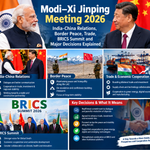
Modi’s meeting with Xi Jinping was scheduled for the evening of September 12, after the closed session and family photograph. The bilateral was expected to review border management talks, advance a strategic economic dialogue addressing India’s trade deficit with China (reported around $112 billion) and market access for Indian companies, and stabilise relations following earlier tensions. Optics throughout the day emphasised unity: Modi was photographed holding hands with both Xi and Putin, smiling and engaging warmly, projecting solidarity among the three major powers at a time of global fragmentation.
Other bilaterals included meetings with Iranian President Pezeshkian, Ethiopian Prime Minister Abiy Ahmed, and representatives from partner and outreach countries. UN Secretary-General António Guterres and heads of international institutions also participated in related engagements.
Context of the Middle East War and Broader Global Pressures
The summit occurred amid heightened West Asia instability. Hostilities involving Iran, US and Israeli actions earlier in the year, Iranian responses affecting Gulf energy infrastructure and shipping, Houthi advances controlling key Red Sea points and islands near the Bab al-Mandeb, and ongoing Gaza and Lebanon dynamics have disrupted energy markets, raised shipping risks and fuelled price pressures (including record diesel costs in some markets). The Strait of Hormuz remains a flashpoint, with discussions of temporary shipping arrangements and warnings of prolonged disruption. BRICS members themselves span the spectrum — Iran as a full member, UAE and Saudi Arabia as members with Gulf perspectives — making consensus language on “dialogue and diplomacy,” restraint, civilian protection and uninterrupted trade/energy flows a carefully calibrated achievement that avoided naming specific parties while addressing shared economic vulnerabilities.
The Russia-Ukraine conflict continues to affect global food, energy and fertiliser markets, reinforcing BRICS’ focus on resilience and alternative payment and trade mechanisms. Unilateral tariffs associated with the Trump administration and climate-linked border measures add further pressure on export-oriented developing economies, explaining the declaration’s strong language on trade openness and opposition to discriminatory barriers.
India’s Chairmanship and the Road Ahead
India’s chairmanship has featured more than 350–400 meetings across dozens of Indian cities, emphasising practical, development-oriented outcomes. The theme of resilience, innovation, cooperation and sustainability, linked to a “Humanity First” vision, guided priorities ranging from digital public infrastructure and AI governance to food and energy security, disaster resilience and women-led development. The New Delhi Declaration’s adoption on day one, rather than after prolonged deadlock, is credited to sustained Indian mediation that balanced competing national positions.
Leaders also participated in the Bharat Innovates exposition, a ceremonial tree-planting, family photographs and a gala dinner hosted by Modi. The second day was to feature an expanded outreach/BRICS Plus session with partner countries, and invitees focused on shaping inclusive global growth.
The declaration does not create a new world order overnight. It advances incremental institutional reforms, practical economic cooperation (local-currency settlements, critical minerals, payments interoperability), technology governance and a collective voice for the Global South. Implementation will depend on follow-up mechanisms, national political will and the ability to translate consensus language into concrete projects amid continuing geopolitical friction.
As the expanded BRICS enters its third decade, the New Delhi Summit demonstrates both the grouping’s growing weight — representing a substantial share of global population, GDP and growth — and the persistent challenges of managing diversity. The unanimous New Delhi Declaration, the high-profile Modi-Xi-Putin interactions, the calibrated response to the Middle East crisis, and the suite of decisions on governance, trade, payments, AI and security together constitute a significant marker of the bloc’s evolving role. Whether these commitments yield measurable results in reforming multilateral institutions, insulating members from external shocks and delivering development gains will define the next phase of BRICS cooperation. For now, India has delivered a consensus document that positions the grouping as a platform for dialogue, reform advocacy and pragmatic collaboration in a turbulent world.