

Home décor has moved far beyond simple aesthetics. In 2026, it sits at the intersection of well-being, sustainability, technology, and personal expression. People spend more time at home than ever before—working, relaxing, entertaining, and recovering—so the spaces we live in directly influence mood, productivity, and daily comfort. A thoughtfully designed interior can lower stress, improve focus, and create a sense of belonging that mass-produced environments rarely deliver. At the same time, rising awareness of environmental impact and the desire for spaces that feel uniquely ours have made intentional décor a priority rather than an afterthought.
The good news is that transformation does not require a full renovation or unlimited budget. Small, strategic changes—fresh paint, better lighting, rearranged furniture, carefully chosen textiles, or a few plants—can completely alter how a room feels. Texture, light, colour, and scale work together to shift atmosphere almost overnight. Whether you live in a compact apartment or a larger house, the principles remain the same: start with function, layer in personality, and edit ruthlessly. This guide explores the defining trends of 2026, practical room-by-room ideas, budget and luxury approaches, solutions for small spaces, colour strategies, furniture selection, sustainability, common pitfalls, and a clear makeover checklist so you can refresh your home with confidence.
Latest Home Décor Trends for 2026
Modern design in 2026 balances restraint with warmth. The cold, ultra-minimal look of earlier years has softened into something more inviting and human.
Modern minimalist interiors still dominate, but with greater softness. Clean lines, uncluttered surfaces, and purposeful furniture remain, yet rooms now include rounded edges, tactile fabrics, and subtle curves that prevent spaces from feeling sterile. Neutral bases—warm whites, soft greys, and muted earth tones—provide calm backdrops, while carefully edited accessories add quiet interest.
Warm and natural interiors respond to a collective craving for comfort. Think soft terracotta, clay pinks, warm beige, olive, and deep forest greens. Materials feel grounded: linen, wool, raw wood, and plaster finishes create a cocoon-like effect. Lighting is layered and warm rather than bright and cool.
Sustainable and eco-friendly décor has moved from niche to mainstream. Buyers increasingly seek furniture and finishes made from responsibly sourced wood, recycled metals, organic textiles, and low-VOC paints. Longevity and repairability matter as much as initial appearance. The goal is beauty that does not come at the planet’s expense.
Smart-home-inspired décor integrates technology without visual clutter. Concealed charging stations, voice-controlled or app-controlled lighting, discreet climate systems, and furniture with built-in power options appear in many homes. The technology supports the design rather than dominating it—soft, indirect light scenes replace harsh overhead fixtures, and automation handles routine adjustments so the space remains serene.
Statement walls remain popular but have evolved. Instead of loud wallpaper everywhere, designers use one focused wall with textured plaster, limewash, subtle patterned wallpaper, or a carefully curated gallery. Natural materials such as wood slats, stone cladding, or woven panels create depth without overwhelming the room.
Indoor plants and biophilic design continue their strong presence. Larger architectural plants, trailing vines, and clustered smaller pots bring life and improve air quality. Biophilic principles go further: views of nature, natural light, organic shapes, and materials that echo the outdoors. Even small apartments benefit from a few well-placed plants and natural textures.
Natural wood, stone, and textured materials define surfaces. Oak, walnut, and lighter timber species appear in flooring, furniture, and wall treatments. Stone—marble, travertine, or more affordable alternatives—shows up in tabletops, bathroom surfaces, and accent walls. Texture is essential: bouclé, nubby linens, ribbed ceramics, and hand-finished plaster replace flat, shiny surfaces.
Vintage and contemporary combinations create character. A mid-century chair next to a clean-lined modern sofa, or an antique mirror above a contemporary console, feels collected rather than matched. The key is balance—enough contrast to feel interesting, enough cohesion to feel intentional.
Multi-functional furniture is essential in most homes. Sofas that convert to beds, nesting tables, extendable dining tables, storage ottomans, and modular shelving allow rooms to serve multiple purposes without looking temporary.
Personalised décor closes the list. Homes increasingly reflect the people who live in them through art, travel objects, handmade pieces, books, and meaningful photographs. Mass-produced “Instagram rooms” feel less satisfying; spaces that tell a story feel more alive.
Room-by-Room Décor Ideas
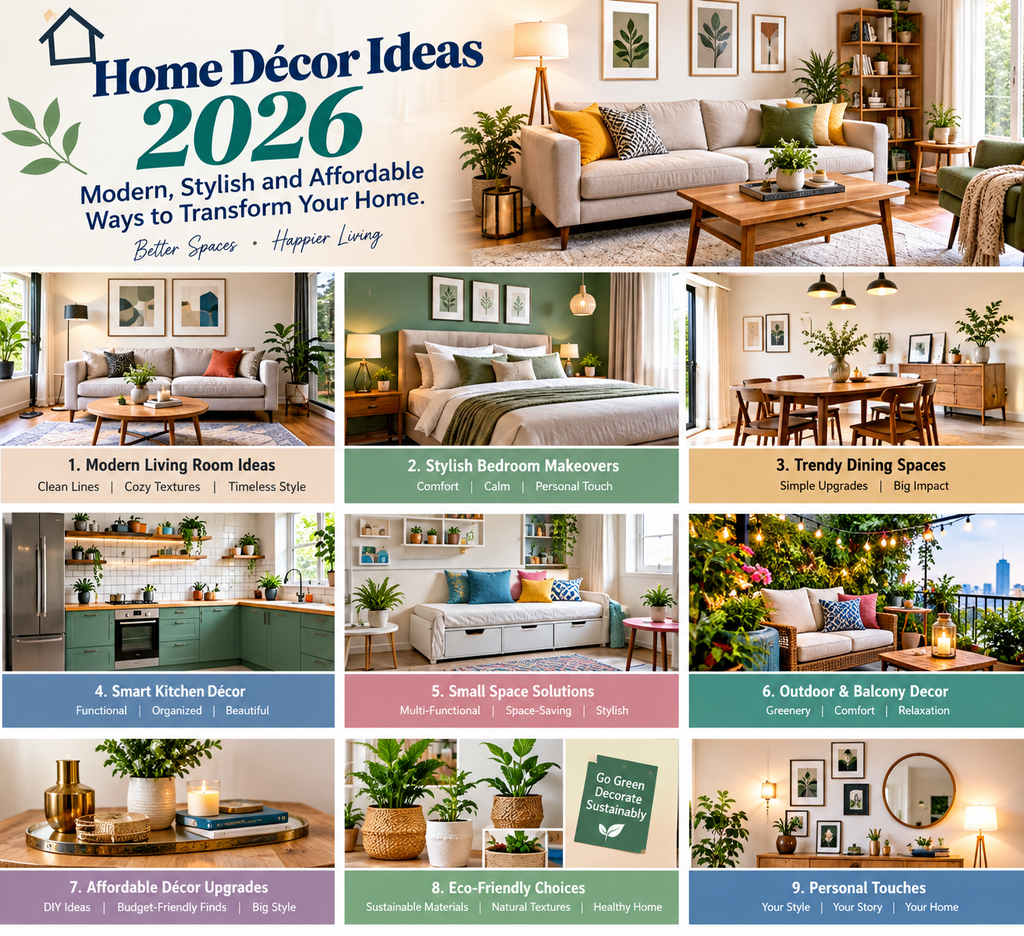
Living room. Treat the living room as a flexible gathering space. Anchor the room with a comfortable sofa in a durable, soft fabric. Add two or three complementary seating pieces rather than forcing everything to match. Layer rugs for texture and warmth—start with a larger natural-fibre rug, then add a smaller patterned or softer rug on top if desired. Lighting should include ambient, task, and accent sources: floor lamps, table lamps, and wall sconces create atmosphere that a single ceiling fixture cannot. Keep surfaces relatively clear; a few books, a sculptural object, and plants usually suffice. A statement wall or large artwork behind the sofa can define the space without cluttering it.
Bedroom. Prioritise rest. Soft, layered bedding in natural fibres, blackout or room-darkening curtains, and warm, dimmable lighting support better sleep. Choose a bed frame that feels substantial but not heavy—upholstered or wooden frames with clean lines work well. Nightstands should hold only essentials plus a lamp and perhaps a small plant or book. Soft rugs underfoot and a comfortable chair or bench at the foot of the bed add luxury without excess. Keep colours calm and consistent so the room feels restorative.
Kitchen. Function comes first, but warmth elevates daily use. Open shelving or glass-front cabinets display favourite ceramics and reduce the closed-in feeling of solid upper cabinets. Natural wood or warm-toned countertops and backsplashes soften the space. Pendant lighting over an island or dining area creates a focal point. Keep small appliances off counters when possible and use trays to group items. A few plants or herbs near a window bring life into the hardest-working room.
Dining area. Even a small dining zone benefits from intention. A solid table that seats your household comfortably, chairs that invite lingering, and lighting that can be adjusted from bright for meals to softer for conversation make a difference. A runner, simple centrepiece, or clustered candles adds softness. If space is tight, a round table often feels more generous than a rectangular one.
Bathroom. Focus on spa-like calm. Soft towels, a good mirror with flattering light, and storage that hides clutter transform even a modest bathroom. Natural materials—wood accents, stone or stone-look surfaces, and woven baskets—add texture. Plants that tolerate humidity and a few thoughtfully chosen accessories (a soap dish, a small tray) complete the look without overcrowding limited surfaces.
Balcony. Treat outdoor space as an extension of the interior. Comfortable seating, weather-resistant textiles, string lights or portable lamps, and plants create an inviting outdoor room. Vertical planters maximise limited floor space. Even a tiny balcony can become a morning coffee spot or evening retreat with a small table, two chairs, and greenery.
Home office. Productivity and comfort must coexist. A desk at the right height, supportive seating, good task lighting, and storage that keeps visual noise low are non-negotiable. Position the desk to take advantage of natural light when possible. Add a plant, a favourite piece of art, and a comfortable throw for cooler days. Cable management and a dedicated charging area keep the space feeling ordered.
Small apartments. Every decision must serve multiple purposes. Choose furniture that can move or transform, use vertical space aggressively, and keep colour and pattern restrained so the eye travels easily. Mirrors opposite windows or light sources expand perceived space. Consistent flooring and a limited colour palette create visual flow between rooms.
Budget-Friendly Home Décor Ideas
Transformation does not require large spending. Start with what you already own. Rearranging furniture often reveals better traffic flow and lighting opportunities at zero cost. Painting one accent wall or an entire room in a carefully chosen colour delivers high impact for relatively low investment.
DIY decorations can be surprisingly effective: simple framed prints, painted furniture, or handmade textile pieces add personality. Affordable wall art—printables, thrifted frames with new art, or large-scale posters—fills empty walls without gallery prices. Lighting upgrades matter more than many people realise; replacing harsh bulbs with warm LEDs and adding a few lamps instantly softens a room.
Cushion covers and curtains are inexpensive ways to introduce colour, pattern, and texture. Changing these seasonally or when trends shift keeps spaces feeling current. Mirrors bounce light and create the illusion of space; even inexpensive ones framed simply work well. Indoor plants, whether real or high-quality faux, bring life and colour. Second-hand and upcycled pieces—refinished furniture, vintage textiles, or reclaimed wood shelves—offer character at a fraction of new retail prices. Focus spending on items you touch daily (sofa, mattress, desk chair) and economise elsewhere.
Luxury Home Décor Ideas
Luxury in 2026 is less about logo-driven excess and more about quality, craftsmanship, and sensory experience. Premium lighting—sculptural pendants, carefully placed wall washers, and high-quality dimmable systems—transforms atmosphere. Designer furniture with excellent proportions and materials becomes investment pieces that last decades. Elegant wallpapers or hand-applied wall finishes create depth that paint alone cannot match. Statement artwork, whether original or limited-edition prints, anchors rooms. Luxury fabrics—heavy linens, wool, silk blends, and performance fabrics that look and feel expensive—elevate sofas, chairs, and bedding. High-end accessories are edited carefully: one or two exceptional objects often look more luxurious than many lesser ones. The overall effect is quiet confidence rather than ostentation.
Home Décor Ideas for Small Spaces
Space-saving furniture is essential: sofa beds, nesting tables, wall-mounted desks, and modular storage systems. Vertical storage—tall bookcases, wall shelves, and over-door organisers—uses height that would otherwise go unused. Mirrors and strategic lighting expand perceived volume; place mirrors to reflect windows or light sources. Multi-purpose pieces reduce the total number of items needed. Decluttering and organisation remain the foundation. Every object should earn its place. A consistent colour palette and continuous flooring help small apartments feel larger and more cohesive.
Colour Trends for 2026
Popular combinations lean warm and grounded. Soft terracotta with warm white and deep olive, clay pink with sage and cream, warm beige with charcoal accents, and muted blues with natural wood tones appear frequently. Earthy neutrals form reliable bases, while deeper greens, rusts, and soft browns add richness.
Choose colours according to room size, lighting, and personal response. Smaller rooms and spaces with limited natural light benefit from lighter, warmer tones that reflect available light. Larger rooms can handle deeper or more saturated colours without feeling closed in. North-facing rooms often need warmer tones to counteract cool light; south-facing rooms can support cooler or deeper hues. Test samples on walls and observe them at different times of day. Personal style matters most—choose colours you genuinely enjoy living with rather than chasing temporary trends. A limited palette used consistently across a home creates calm and visual connection between spaces.
How to Choose Furniture and Décor
Balance functionality, comfort, size, colour, quality, and budget. Measure carefully and respect scale: furniture that is too large overwhelms a room; pieces that are too small look lost. Prioritise comfort for items used daily. Colour and material should harmonise with existing elements while allowing for future flexibility. Quality construction and durable finishes usually justify higher initial cost because they last longer and look better over time. Set a realistic budget and allocate more to foundational pieces. Mix higher- and lower-cost items so the overall result feels intentional rather than uneven.
Sustainable Home Décor
Eco-friendly materials—FSC-certified wood, recycled metals, organic cotton and linen, natural rubber, and low-impact finishes—reduce environmental cost. Recycled and refurbished furniture gives existing pieces new life. Energy-efficient LED lighting and smart controls lower long-term energy use. Natural materials age gracefully and can often be repaired. Reducing waste means buying fewer, better things, repairing when possible, and choosing timeless designs over fleeting trends. Second-hand markets, local makers, and brands with transparent supply chains support more responsible consumption.
Common Home Décor Mistakes to Avoid
Excessive decoration creates visual noise and makes spaces feel smaller. Poor lighting—relying only on overhead fixtures or using cool, harsh bulbs—undermines even the best furniture. Wrong furniture size or scale throws rooms off balance. Too many competing colours or patterns create restlessness. Clutter accumulates when storage is inadequate, or editing is neglected. Ignoring functionality leads to beautiful but impractical spaces. Measure twice, edit often, and prioritise how a room actually feels and works day to day.
Practical Home Makeover Checklist
- Assess each room: note what works, what frustrates you, and how the space is used.
- Declutter thoroughly; remove or store items that no longer serve.
- Deep clean and repair basic issues (walls, floors, hardware).
- Decide on a cohesive colour and material direction for the home.
- Address lighting: replace bulbs, add lamps, improve task lighting.
- Rearrange furniture for better flow and function.
- Introduce or refresh textiles—rugs, cushions, curtains, bedding.
- Add plants and natural elements.
- Install or refresh wall treatments and artwork.
- Evaluate storage and organisation solutions.
- Layer in personal objects and finishing accessories.
- Live with the changes for a week or two, then refine.
Frequently Asked Questions
What are the biggest home décor trends in 2026?
Warm minimalism, biophilic elements, sustainable materials, textured natural finishes, soft curved furniture, smart-home integration that stays visually quiet, and personalised collected spaces rank among the strongest directions.
How can I decorate my home on a low budget?
Rearrange existing furniture, paint strategically, update lighting and textiles, use plants, shop second-hand, DIY simple projects, and focus spending only on high-impact items you use daily.
How can I make a small room look bigger?
Use light, continuous colours, maximise natural and artificial light, add mirrors, choose appropriately scaled multi-functional furniture, keep surfaces relatively clear, and emphasise vertical space.
Which colours are best for modern interiors?
Warm neutrals, soft earth tones, muted greens, terracotta, and carefully balanced broader accents work well. The best colours depend on light, room size, and personal preference.
What are the best living room décor ideas?
Comfortable seating, layered lighting and rugs, a limited colour palette, natural materials and plants, edited accessories, and a clear focal point such as a fireplace, artwork, or statement wall.
How can I make my bedroom look luxurious?
Invest in quality bedding and a mattress, add soft layered lighting, choose calm consistent colours, include tactile textiles, keep surfaces clear, and introduce one or two higher-quality pieces such as a good headboard or nightstands.
What are sustainable home décor ideas?
Choose durable, responsibly sourced or recycled materials, buy second-hand or vintage when possible, favour energy-efficient lighting, repair rather than replace, and select timeless designs that reduce the need for frequent updates.
How often should you update home décor?
Foundational pieces can last many years. Refresh textiles, accessories, plants, and paint every few years or as needed. Major updates make sense when lifestyle, family size, or personal taste changes significantly. Seasonal textile swaps keep spaces feeling current with minimal effort.
A well-considered home supports the life lived inside it. In 2026, the most successful interiors combine modern clarity with warmth, sustainability with comfort, and personal meaning with practical function. Start with the rooms you use most, make deliberate choices, and allow the space to evolve with you. Small, consistent improvements compound into a home that feels both stylish and genuinely livable.