

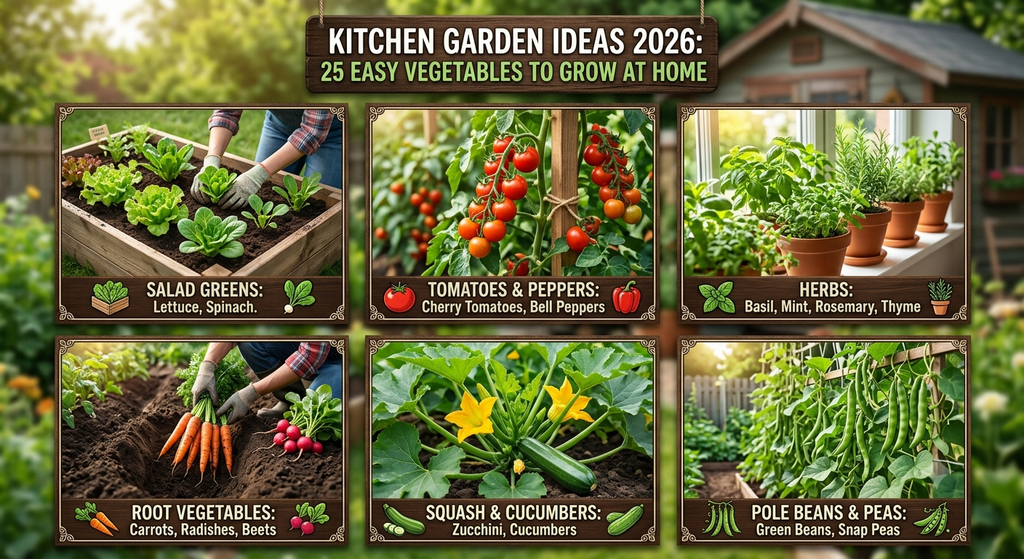
In 2026, kitchen gardens continue to thrive as more people seek fresh, flavorful produce, greater food security, and a deeper connection to what they eat. Whether you have a spacious backyard, a sunny balcony, a windowsill, or just a few containers on a patio, growing your own vegetables remains one of the most rewarding and accessible ways to improve daily meals, reduce grocery costs, and support personal well-being. Modern trends emphasise compact and container-friendly varieties, climate-resilient seeds, vertical growing systems, and soil-health practices that make success easier than ever for beginners.
A well-planned kitchen garden delivers continuous harvests of nutrient-dense food with minimal space and effort. Leafy greens provide quick cut-and-come-again yields, root crops offer satisfying underground surprises, and fruiting plants like tomatoes and peppers reward patience with abundant summer crops. Many of the easiest vegetables tolerate a range of conditions, grow rapidly, and require little more than consistent water, sunlight, and basic soil care. This guide highlights 25 beginner-friendly vegetables ideal for home growing in 2026, along with practical tips for planting, care, and harvesting. These choices prioritise speed, reliability, space efficiency, and culinary usefulness so almost anyone can start successfully.
Getting Started with Your 2026 Kitchen Garden
Success begins with the basics. Most vegetables need at least 6 hours of direct sunlight daily, though many leafy greens tolerate partial shade. Use quality potting mix or amend garden soil with compost for drainage and nutrients. Containers work exceptionally well—choose pots with drainage holes and match size to the crop (shallow for lettuce and radishes, deeper for tomatoes and carrots). Water consistently but avoid waterlogging; most plants prefer soil that is moist but not soggy. Start small with 4–8 plants or a single raised bed or large container to build confidence. Succession planting (sowing small batches every 1–2 weeks) keeps harvests coming. In cooler climates, use season extenders such as row covers or cold frames; in warmer areas, provide afternoon shade for heat-sensitive crops. Organic practices—compost, mulching, and beneficial insects—keep plants healthy without harsh chemicals. Track local frost dates and choose varieties suited to your zone and growing season length.
With these foundations in place, here are 25 easy vegetables that consistently succeed for home growers.
1. Radishes
Radishes rank among the fastest and most reliable crops for beginners. Wide varieties mature in just 20–30 days, delivering crisp, peppery roots perfect for salads, snacks, or roasting. Direct-sow seeds ½ inch deep in loose soil or containers as soon as the ground can be worked in spring, or again in fall. Thin seedlings to 2–3 inches apart. They prefer cool weather and consistent moisture to avoid woody or spicy roots. Harvest when roots reach about 1 inch in diameter. Successive sowings every 10–14 days ensure a steady supply. Compact varieties thrive in shallow pots or mixed beds. In 2026, colourful mixes (red, purple, white, and pink) add visual appeal while remaining equally easy.
2. Lettuce (Leaf and Butterhead Types)
Leaf lettuce and looseleaf mixes are nearly foolproof and ready in 30–45 days. Cut outer leaves and the plant continues producing for weeks. Sow seeds thinly on the surface or lightly covered in fertile, moist soil. Provide partial shade in hot weather to prevent bolting. Containers as shallow as 6 inches work well. Water regularly and harvest frequently to encourage new growth. Varieties bred for heat tolerance extend the season. Homegrown lettuce tastes far superior to store-bought and stays crisp longer when picked fresh.
3. Spinach
Spinach thrives in cool weather and delivers nutrient-packed leaves in 35–50 days. Sow seeds directly in early spring or fall, ½ inch deep and 2–3 inches apart. Keep soil moist for good germination. Harvest baby leaves early or wait for larger ones; the plant often regrows after cutting. It tolerates light frost and partial shade. In warmer climates, choose bolt-resistant varieties and provide afternoon shade. Spinach works beautifully in containers, window boxes, or interplanted with taller crops.
4. Arugula (Rocket)
Arugula offers a peppery kick and matures in as little as 30 days. Direct-sow in cool seasons, covering seeds lightly. Thin to 4–6 inches apart. It grows quickly in containers or beds and tolerates some shade. Harvest outer leaves or cut entire plants at the base for cut-and-come-again production. Flavour intensifies with heat, so successive plantings and cooler conditions keep it mild. Ideal for salads, pizzas, and pesto.
5. Kale
Kale is remarkably hardy, often sweetening after light frost, and produces for months. Start from seed or transplants; it matures in 50–70 days, but baby leaves are ready earlier. Plant in full sun to partial shade with rich, well-drained soil. Space 12–18 inches apart. Harvest lower leaves first to keep the plant productive. It grows well in containers and resists many pests. Curly, lacinato (dinosaur), and red varieties all perform reliably for beginners.
6. Swiss Chard
Swiss chard provides continuous harvests of colourful stems and nutritious leaves over a long season. Sow seeds in spring or transplant seedlings. It tolerates heat better than spinach and light frost. Space plants 8–12 inches apart. Cut outer leaves as needed; the centre continues growing. Rainbow varieties add ornamental value to kitchen gardens. Containers of 8–12 inches depth suit it perfectly.
7. Bush Green Beans
Bush beans require no trellis and produce heavily in 50–60 days. Sow seeds directly after the last frost when soil is warm, 1 inch deep and 3–4 inches apart. They fix nitrogen, improving soil for neighbouring plants. Provide full sun and consistent moisture. Harvest pods when young and tender to encourage more production. Compact varieties fit easily in pots or small beds. One or two plantings can yield abundant fresh beans for steaming, stir-fries, or freezing.
8. Peas (Snap or Snow)
Peas love cool weather and climb or bush depending on variety. Sow early in spring or late summer for fall crops. Provide a simple trellis or netting for taller types; bush varieties need little support. Seeds germinate best in cool soil. Harvest pods frequently when filled but still tender. They enrich the soil with nitrogen. Container growing works well with compact or dwarf cultivars.
9. Cherry Tomatoes
Cherry tomatoes are more forgiving and productive than larger types for beginners. Choose determinate or compact patio varieties for containers. Start from transplants after frost danger passes. Provide full sun, consistent water, and support (cages or stakes). They fruit in 60–80 days and keep producing until frost. Regular harvesting encourages continuous yields. In 2026, disease-resistant and flavorful hybrids make success even more reliable on balconies and patios.
10. Bell Peppers
Bell peppers grow compactly and produce sweet fruits in 60–90 days from transplant. Plant in full sun after soil warms. Use containers of at least 5 gallons. Keep soil evenly moist and feed moderately. Green peppers mature first; leave them longer for red, yellow, or orange. Compact varieties thrive in pots and reward careful watering with high yields.
11. Chilli Peppers / Hot Peppers
Chilli peppers are space-efficient and highly productive. Wide compact varieties suit containers and windowsills. Transplant after frost, provide full sun, and water consistently. Fruits develop heat and colour over time. Harvest regularly to promote more flowering. They store well dried or frozen and add punch to countless dishes.
12. Cucumbers (Bush or Compact Types)
Bush cucumbers reduce sprawling and suit containers or small beds. Sow or transplant after soil warms. Provide a short trellis if desired for cleaner fruit. Keep soil moist and harvest young for best flavour and continued production. Ready in 50–70 days. Vertical growing maximises limited space while improving airflow.
13. Zucchini / Summer Squash
One or two zucchini plants often produce more than a household can eat. Choose compact or bush varieties. Plant after frost in rich soil with full sun. Space adequately or use large containers. Harvest fruits at 6–8 inches for tenderness; frequent picking encourages more. Ready in about 45–55 days. Mulch helps retain moisture and suppress weeds.
14. Carrots (Compact or Round Varieties)
Carrots need loose, stone-free soil. Direct-sow in spring or fall, thinning carefully to 2–3 inches. Compact or round types (such as Paris Market) succeed in shallower containers. Keep soil evenly moist for straight roots. Maturity ranges from 50–75 days depending on variety. Fresh carrots offer exceptional sweetness.
15. Beets
Beets deliver dual harvests of roots and edible greens. Sow directly in cool weather, thinning to 3–4 inches. They tolerate a range of soils and mature in 50–70 days. Harvest baby beets early or allow full size. Greens can be cut earlier. Colourful varieties (red, golden, striped) add interest and store well.
16. Turnips
Turnips grow quickly (40–60 days) and provide both roots and greens. Sow in spring or fall in loose soil. Thin seedlings and keep moist. Harvest when roots are 2–3 inches for tenderness. Cool weather improves flavour. They fit well in succession plantings and mixed beds.
17. Spring Onions / Scallions
Spring onions occupy little space and mature in 8–10 weeks from seed or faster from sets. Sow thickly in containers or rows. Harvest as needed by pulling whole plants or cutting greens. They tolerate partial shade, and successive sowings keep a continuous supply for garnishes and cooking.
18. Potatoes (in Bags or Containers)
Growing potatoes in large bags, buckets, or grow bags is simple and space-efficient. Plant seed potatoes in spring with good drainage. Hill the soil or add compost as shoots grow. Harvest new potatoes early or wait for full maturity. One bag can yield a satisfying crop of flavorful tubers with minimal effort.
19. Okra
Okra thrives in warm weather and produces continuously once established. Sow or transplant after the soil is warm. Provide full sun and consistent moisture. Harvest pods when 2–4 inches long for tenderness. Compact varieties suit containers. The plants are ornamental as well as productive.
20. Eggplant (Compact or Patio Varieties)
Modern compact eggplants grow well in containers. Transplant after frost into rich, warm soil with full sun. Support if needed and keep evenly watered. Harvest fruits when glossy and firm. Smaller varieties mature faster and produce reliably for beginners.
21. Bok Choy / Pak Choi
Bok choy matures rapidly (30–45 days for baby types) and thrives in cool weather. Direct-sow or transplant. Provide consistent moisture to prevent bolting. Harvest whole heads or outer leaves. It grows well in containers and adds crisp texture to stir-fries and soups.
22. Mustard Greens
Mustard greens offer spicy flavour and quick growth. Sow in cool seasons for best results. Harvest baby leaves or full size. They tolerate light frost and partial shade. Cut-and-come-again harvesting extends the season. Use in salads, sautés, or cooked greens.
23. Collard Greens
Collards are heat- and cold-tolerant and produce large, nutritious leaves over a long period. Transplant or direct-sow. Space plants adequately and harvest lower leaves regularly. Flavour improves after frost. They perform reliably in beds or large containers with rich soil.
24. Kohlrabi
Kohlrabi forms crisp, mild bulbs above ground in 45–60 days. Sow in spring or fall. Thin seedlings and keep soil moist. Harvest when bulbs reach 2–3 inches for best texture. Both green and purple varieties are easy and versatile, raw or cooked.
25. Garlic (from Cloves)
Garlic is planted in fall in many climates for summer harvest, or in spring in milder areas. Separate cloves and plant the pointed end up, 2 inches deep. Mulch well. It requires little care beyond weeding and occasional watering. Homegrown garlic offers superior flavour and stores for months. Softneck varieties suit warmer zones; hardneck types provide scapes as a bonus crop.
Practical Tips for Ongoing Success in 2026
Combine crops thoughtfully: interplant fast radishes with slower carrots, or grow lettuce in the shade of taller tomatoes. Mulch to conserve moisture and suppress weeds. Monitor for common pests such as aphids or slugs and use physical barriers, hand-picking, or organic controls. Fertilise lightly with compost or balanced organic fertilisers; overfeeding can reduce flavour or encourage leafy growth at the expense of fruit. Keep a simple garden journal noting planting dates, varieties, and results to refine future seasons.
Vertical systems, hanging planters, and multi-tiered containers maximise small spaces. Look for seed packets labelled “compact,” “bush,” “patio,” “dwarf,” or “container” for best results in limited areas. Climate-adapted and disease-resistant varieties released in recent years further improve reliability. Many gardeners in 2026 also incorporate companion planting (basil near tomatoes, marigolds for pest deterrence) and soil-building practices such as cover crops or homemade compost.
Harvest at peak ripeness for maximum flavour and nutrition. Most leafy greens taste best when young and tender. Fruiting vegetables continue producing when picked regularly. Store surplus by freezing, pickling, drying, or sharing with neighbours.
A kitchen garden does more than supply food. It offers daily outdoor activity, stress reduction, and the satisfaction of eating something you nurtured from seed or transplant. Even a few containers of lettuce, radishes, and cherry tomatoes can transform meals and build lasting gardening confidence. Start with the easiest crops on this list that match your climate, space, and taste preferences. Observe, adjust, and expand gradually. By the end of the season, you will have fresh produce, practical skills, and a stronger appreciation for the simple act of growing food at home.
In 2026 and beyond, the most successful kitchen gardens remain those that prioritise enjoyment, consistency, and working with local conditions rather than perfection. Choose a sunny spot, prepare decent soil, plant a handful of these reliable vegetables, and water regularly. The harvests—and the experience—will follow.