

September 21, 2026
The Red Sea, long one of the world’s most vital maritime arteries, has once again become a flashpoint of geopolitical tension and commercial risk in 2026. What began as a Houthi campaign against shipping linked to Israel in late 2023 has evolved into a broader, more complex crisis. The Iran-backed Houthis’ July 2026 declaration of a naval blockade against Saudi Arabia, followed by territorial advances that placed key islands and the Yemeni Red Sea coastline under their control, has layered fresh insecurity onto an already strained global shipping system still recovering from earlier disruptions and now compounded by the wider Iran conflict.
Approximately 12 to 15 per cent of global maritime trade, valued at more than $1 trillion annually, and roughly 30 per cent of container traffic normally transit the Red Sea corridor stretching from the Suez Canal in the north to the Bab el-Mandeb Strait in the south. The strait itself, only about 12.5 miles wide at its narrowest points, funnels vessels within easy range of shore-based and island-based weapons. Control of Perim (Mayun) Island, seized by Houthi forces around September 11, 2026, places shipping lanes less than three miles from territory under the group’s effective control. The capture of the port of Mokha, the Hanish Islands, and the remaining stretches of Yemen’s Red Sea coast has given the Houthis unprecedented physical dominance over the eastern approaches to the chokepoint.
Escalation Timeline and Security Landscape
The current phase accelerated after the breakdown of earlier ceasefires. Following a relative lull after the October 2025 Gaza-related pause, Houthi forces resumed activity in the context of the broader U.S.-Israeli confrontation with Iran. On July 20, 2026, the group formally announced a maritime embargo targeting Saudi vessels and ports. Subsequent attacks included strikes on tankers and energy infrastructure, with incidents reported as far north as the approaches to Yanbu. Human Rights Watch assessed that several of these attacks on commercial vessels likely constituted war crimes, citing civilian casualties among seafarers.
By mid-September, Houthi advances had secured effective control of Yemen’s entire Red Sea coastline on the eastern side of Bab el-Mandeb. The group has stated that international navigation remains safe except for Saudi-linked shipping, yet the practical effect has been heightened war-risk assessments and selective avoidance. Joint Maritime Information Centre (JMIC) threat levels for the Bab el-Mandeb have remained at “Substantial.” War-risk insurance premiums for Red Sea transits have risen, with reports in the third quarter of 2026 citing levels around 0.7 to 1.0 per cent of hull value for a typical transit period, and higher figures in the southern Red Sea during peak uncertainty.
Naval and coalition responses have been stretched. Assets previously focused on earlier Red Sea protection missions have also been drawn into the Hormuz theatre and other regional contingencies. This dispersion has coincided with a noted resurgence of piracy in the Gulf of Aden and off Somalia, with at least two vessel seizures reported in August 2026. The combination of state-backed asymmetric threats and opportunistic criminal activity has created a multi-layered security environment that operators must navigate daily.
Seafarers remain the most exposed. Attacks involving missiles, drones, and small boats have caused fatalities and injuries. The psychological and operational burden on crews is significant, contributing to higher crew costs, more frequent rotation demands, and increased reliance on armed private security where permitted.
Trade Routing and Volume Shifts
Traffic through the southern Red Sea and Bab el-Mandeb has not returned to pre-2023 norms. Pre-crisis daily averages hovered near 70–75 vessels; recent observations have shown figures closer to 20–30 commercial transits on many days, with commodity vessel counts sometimes in the low twenties. Suez Canal transits have recovered more strongly than the southern chokepoint in absolute terms at certain points in 2026, reaching multi-year highs in some four-week windows, yet overall volumes remain substantially below historical baselines—often cited in the range of 40 per cent lower than pre-crisis levels.
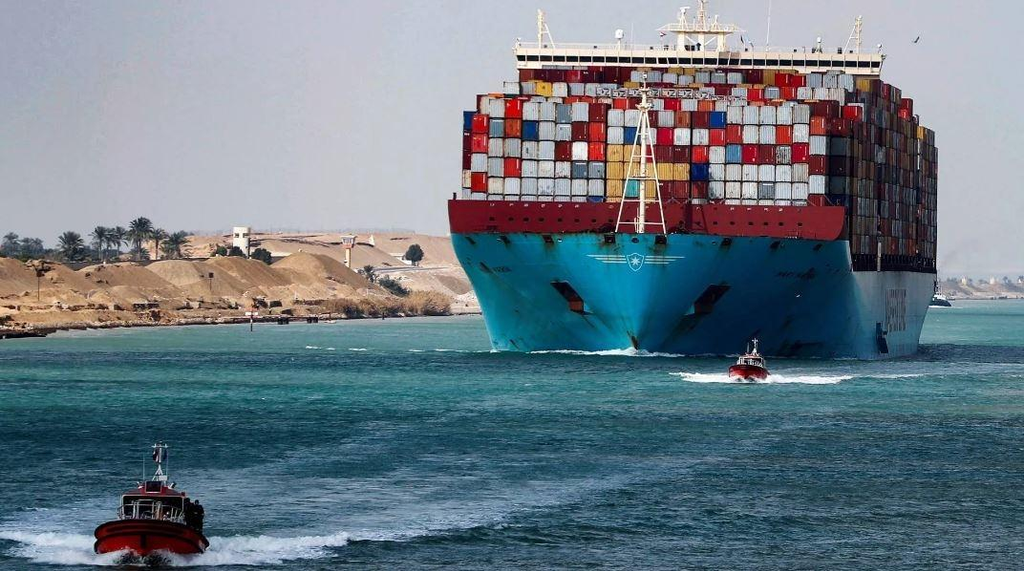
Major container lines have taken a measured approach. MSC, Maersk, Hapag-Lloyd, Cosco, and OOCL have restarted selected East-West strings through the Suez and Red Sea corridor, particularly on Asia-Mediterranean services. Sea-Intelligence estimates for September 2026 suggested more than a quarter of Asia-Europe liner capacity could transit the Red Sea, with higher shares on Mediterranean routes and lower shares on North Europe headhaul. Ultra-large containerships, almost entirely absent in 2025, have reappeared in modest numbers. Yet the majority of Asia-Europe capacity continues to favour the Cape of Good Hope route for reliability and lower insurance exposure.
The Cape diversion adds 10 to 14 days or more to voyage times on Asia-Europe trades and increases fuel consumption and operational costs. For tankers, the extra distance can add hundreds of thousands to over a million dollars per voyage depending on vessel size and bunker prices. Saudi-flagged or Saudi-linked vessels have been particularly affected by the embargo, with multiple examples of rerouting around the Cape documented since late July.
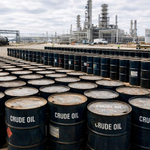
Energy flows illustrate the interaction of the two chokepoints. With the Strait of Hormuz severely constrained earlier in the Iran conflict, Saudi Arabia had increased reliance on its East-West (Petroline) pipeline to the Red Sea port of Yanbu. An attack on a pumping station around September 10, 2026, led to a preemptive shutdown of the line, which had been carrying the bulk of Saudi seaborne crude exports via Yanbu. This forced further adjustments in export patterns and raised the cost and complexity of moving Saudi crude to Asian markets.
Insurance, Costs, and Freight Market Effects
War-risk premiums have become a decisive factor in routing decisions. Even when physical risk is assessed as manageable for non-Saudi vessels, the commercial calculus often favours longer but more predictable Cape routings. P&I clubs and underwriters have adjusted cover, with some periods of restricted or cancelled cover for the southern Red Sea. Freight rates have shown volatility: Asia-Europe container spot rates moderated from mid-year peaks but remain elevated relative to long-term averages. VLCC and other tanker rates spiked dramatically at points when dual Hormuz-Red Sea risk was highest, with reports of daily hire rates exceeding $1 million in extreme conditions for certain trades.
These higher costs feed directly into landed prices for goods. For energy importers in Asia and Europe, the combination of longer routes, higher insurance, and occasional cargo delays translates into firmer crude and product prices. For containerised consumer goods, electronics, automotive parts, and intermediate inputs, the impact appears in longer lead times, higher inventory holdings, and selective price increases.
Global Supply Chain Consequences
The Red Sea crisis of 2026 does not occur in isolation. It coincides with residual effects from earlier disruptions, concurrent risks in the Strait of Hormuz, elevated Black Sea tensions affecting grain and energy, and the Somali piracy uptick. The cumulative effect is a reduction in the resilience of just-in-time global supply chains.
Manufacturers and retailers dependent on Asia-Europe and Asia-Mediterranean lanes have extended safety stocks and dual-sourced critical components where feasible. Automotive and electronics sectors, already sensitive to component delays, face extended transit times that can disrupt production schedules. Food security concerns arise indirectly through higher fertiliser and energy costs and through competition for vessel capacity. African Red Sea states, including Egypt, Djibouti, Eritrea, and Ethiopia, face secondary effects: reduced Suez Canal revenues for Egypt (though partial recovery has occurred), higher shipping costs for regional trade, and elevated maritime security requirements.
Egypt’s Suez Canal remains operational and has seen improved transit numbers relative to the trough, yet revenue remains sensitive to volume. Any sustained further reduction would pressure public finances already managing broader economic challenges. For landlocked or dependent economies in the Horn of Africa and beyond, higher freight costs act as a tax on imports of essentials and exports of commodities.
The crisis also highlights the limits of adaptation. While the Cape route provides a viable alternative for many trades, it cannot fully absorb simultaneous disruptions at both Hormuz and Bab el-Mandeb without significant capacity strain, higher demurrage, and port congestion at destination hubs. Tanker markets in particular have shown signs of tightness when both chokepoints face elevated risk.
Diplomatic and Operational Responses
International responses have included mixed naval presence, diplomatic pressure, and commercial adaptation. United Nations statements have underscored the volatility of Bab el-Mandeb while noting that tracking data still shows commercial flows. Calls for restoration of navigational rights under earlier Security Council resolutions continue. Egypt has rejected direct Houthi overtures for shipping talks, wary of legitimising the group’s control over an international waterway. Shipping industry bodies and flag states continue to issue advisories emphasising high risk rather than formal closure.
Carriers have adopted differentiated strategies: some have returned selected services under enhanced security protocols and after internal reviews; others maintain Cape preference. Vessel operators increasingly manage AIS identity and destination declarations carefully, and some sailings operate with heightened vigilance or limited dark periods near the strait. Private security, where available and permitted, remains part of the toolkit for certain vessel types.
Outlook and Structural Implications
As of late September 2026, the Red Sea corridor remains open but operationally hazardous. Traffic continues, particularly for non-Saudi commercial vessels, yet confidence is fragile. A single high-profile incident—whether a successful strike on a major containership or tanker, or further territorial consolidation that enables more effective interdiction—could rapidly reverse the partial return of liner capacity to Suez.
Structurally, the crisis reinforces several trends already visible since 2023–2024: greater diversification of routes and suppliers, higher baseline inventory levels, increased interest in nearshoring or friend-shoring for critical goods, and permanent elevation of geopolitical risk in freight rate models and insurance pricing. The dual-chokepoint vulnerability (Hormuz plus Bab el-Mandeb) has become a standing concern for energy security planners in Asia and Europe.
Longer-term resolution depends on the trajectory of the wider regional conflict, the durability of any future ceasefires, and the ability of international naval coalitions to restore a credible security umbrella without escalating the conflict further. In the interim, the global supply chain absorbs the costs through longer voyages, higher insurance, elevated freight, and the quiet accumulation of inventory buffers. The Red Sea of 2026 stands as a stark reminder that freedom of navigation remains a contested and economically consequential principle, and that the world’s most efficient trade routes are only as reliable as the security environment that surrounds them.
The human cost—risks borne by seafarers of many nationalities—continues alongside the commercial and strategic dimensions. Until a more stable security architecture takes hold, the southern Red Sea and Bab el-Mandeb will remain a zone of elevated risk, forcing continuous recalibration by shipowners, charterers, insurers, and the governments that depend on the free flow of goods and energy through this narrow and strategically vital waterway.