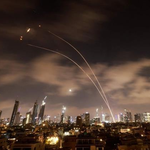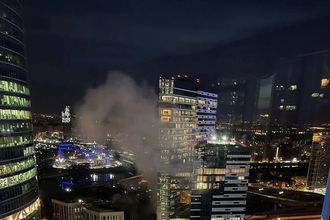


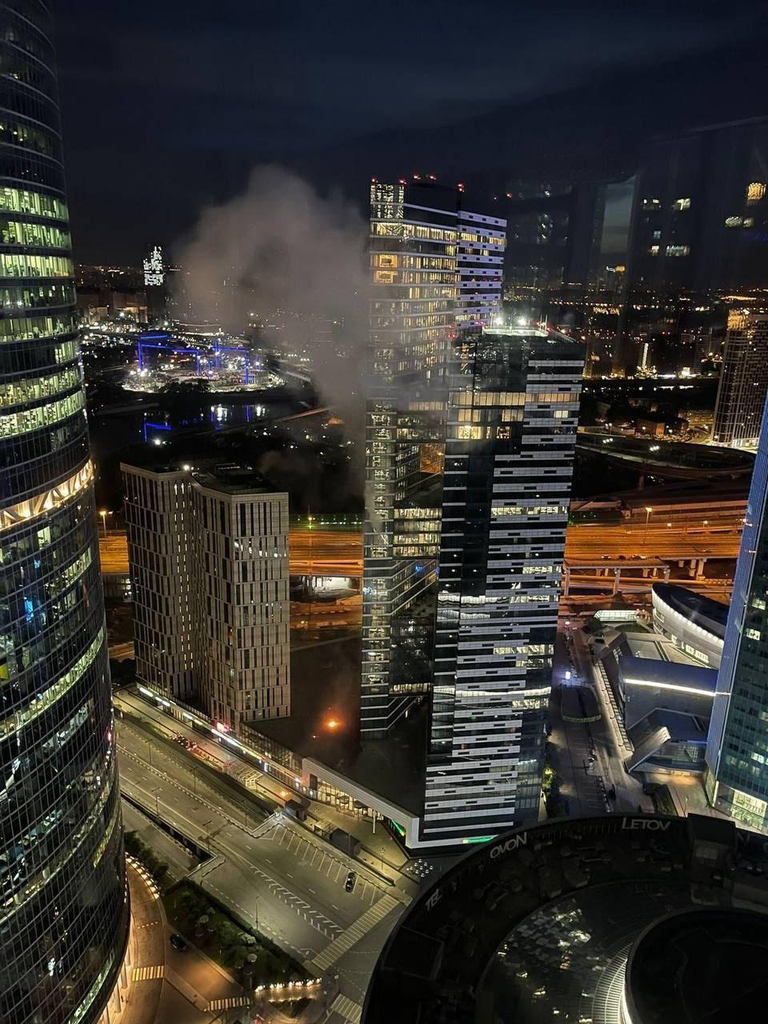
MOSCOW / KYIV — On the morning of Sunday, September 20, 2026, as Russians cast final ballots in the country’s first parliamentary elections since the full-scale invasion of Ukraine, the capital and its surrounding region came under what local authorities described as the largest Ukrainian drone assault of the war. Moscow Mayor Sergei Sobyanin reported that Russian air defences had intercepted more than 1,600 drones since the previous day, including roughly 450 heading toward the city itself. Several drones penetrated the defensive ring, striking the Gazpromneft-Moscow Oil Refinery in the Kapotnya district and damaging residential buildings. Officials reported at least two deaths—later updated in some accounts to three—and about 20 injuries across the wider Moscow region. Hundreds of residents were evacuated from a high-rise in the Ramenskoye district after a fire broke out on the roof.
The attack unfolded against the backdrop of a tightly managed three-day vote for the State Duma and concurrent regional and local contests. President Vladimir Putin has framed the elections as a demonstration of national unity and support for Russia’s “special military operation.” Ukrainian President Volodymyr Zelensky confirmed that Ukrainian forces had struck a key oil facility and a logistics site in the Moscow region, describing the targets as generating “billions of dollars that sustain the war machine.” He noted the use of domestically produced long-range systems, including Flamingo and Pelican missiles alongside drones. Russia’s Defence Ministry said it had downed more than 1,100 Ukrainian drones nationwide, plus additional projectiles over Crimea and the Black Sea. Independent verification of the exact numbers remains limited.
The timing was unmistakable. Voting concluded on September 20 after opening on September 18. Preliminary results showed the ruling United Russia party leading with approximately 57 per cent of the party-list vote after partial counts, well ahead of the Communist Party (around 14 per cent), the Liberal Democratic Party, New People, and A Just Russia. Turnout was reported at 56.66 per cent by the close of polls—higher than the previous Duma election. Cyberattacks on electronic voting systems in Moscow and other disruptions had been reported in the preceding days; authorities said they were repelled. Moscow Mayor Sobyanin explicitly linked the drone wave to an attempt to disrupt the vote, declaring that “the adversary failed to achieve this.”
The Moscow Oil Refinery, one of Russia’s largest and a repeated target in recent months, processes millions of tons of crude annually and supplies a significant share of the capital region’s gasoline, diesel, and jet fuel. Video circulating on social media showed plumes of smoke rising over the facility at dawn. A warehouse complex was also hit. In residential areas, debris and direct impacts caused fires and structural damage. A 44-year-old woman was killed when a drone struck a three-story building in Sofyino; an elderly man died in a private home in the Orekhovo-Zuyevo district. Additional injuries included children. Russian officials reiterated that they do not target civilians; Ukrainian statements emphasised military and economic targets supporting the war effort.
This strike forms part of a sustained Ukrainian campaign against Russian energy and logistics infrastructure that intensified through 2026. Ukrainian forces have repeatedly hit refineries, fuel depots, and related facilities deep inside Russian territory, contributing to fuel shortages, export restrictions, and price pressures on global diesel markets. Russia has responded with continued long-range drone and missile attacks on Ukrainian energy, transport, and urban targets. Both sides have traded accusations of deliberate civilian endangerment while insisting their operations remain focused on legitimate military objectives.
The broader diplomatic context added another layer of complexity. Earlier in September, U.S. President Donald Trump announced that Russia and Ukraine had agreed to halt strikes on each other’s energy infrastructure, framing the understanding as a step toward easing global fuel price pressures. Neither side fully confirmed or adhered to such a pause. The Kremlin described the concept as a “very good idea” but insisted additional measures—such as protecting commercial shipping and lifting sanctions—would be required. Ukrainian officials conditioned any reciprocal halt on verifiable Russian restraint and broader movement toward ending the war. Strikes continued on both sides in the days that followed. Trump later signed additional sanctions legislation targeting Russian energy and related sectors while his administration continued parallel diplomatic contacts.
Inside Russia, the parliamentary vote took place under conditions of heightened security and constrained political competition. The liberal Yabloko party, the only registered force that had openly opposed the war, was barred from the federal party-list ballot by court order. Opposition observers reported detentions, restricted access to polling stations, and other irregularities; authorities rejected many of the claims. Online and electronic voting was expanded and heavily promoted. Putin himself cast an online ballot. State media portrayed the process as orderly and reflective of public support for the course of the country. Independent analysts and Western governments dismissed the exercise as predetermined, noting the absence of genuine competition and the climate of wartime repression. More than 2,000 people remain imprisoned on political grounds according to monitoring groups.
Security concerns have risen steadily inside Russia as Ukrainian long-range capabilities improved. Drone attacks on Moscow and other cities, once rare, have become more frequent and ambitious. Earlier in 2026, security officials reportedly discussed postponing the Duma elections amid falling approval ratings for United Russia, economic strains, fuel shortages, and the psychological impact of strikes reaching the capital. Martial law or heightened alert regimes were floated as possible legal vehicles for delay, though the vote proceeded on schedule. Mobile internet restrictions, temporary airport closures, and expanded air-defence deployments have become routine in many regions. The September 20 barrage, occurring on election day itself, underscored the difficulty of insulating the political centre from the consequences of a prolonged war.
On the Ukrainian side, the overnight Russian response included drones and missiles that killed civilians, among them children, in the Kyiv and Sumy regions, according to local officials. Ukrainian air defences claimed to have intercepted the majority of incoming threats. The pattern of mutual deep strikes has accelerated even as frontline advances remain incremental and costly. Russian forces continue grinding operations in Donetsk and other sectors; Ukrainian forces have conducted counterattacks and long-range interdiction aimed at degrading logistics, air defences, and revenue streams. Casualty figures on both sides remain high, though exact numbers are contested and often opaque.
International reaction was swift but largely predictable. Western governments condemned the inclusion of occupied Ukrainian territories in the Russian electoral process as a violation of international law. European officials reiterated support for Ukraine’s territorial integrity. Calls for reinforced air defences, additional sanctions, and sustained military assistance continued. Moscow accused Kyiv and its partners of seeking to destabilise the Russian political process. Neither capital showed immediate signs of altering its strategic approach.
The human cost inside the Moscow region was immediate and visible. Evacuations, damaged apartment blocks, and the sight of smoke over an industrial facility in the capital region brought the war closer to ordinary residents who had previously experienced it mainly through television, mobilisation notices, and economic pressure. Fuel shortages earlier in the year had already tested public patience in some areas. The election-day attack reinforced a sense that the conflict is no longer distant. At the same time, official messaging emphasised resilience, the effectiveness of air defences, and the failure of any attempt to sow panic or halt the democratic process as defined by the authorities.
Looking ahead, the newly elected State Duma is expected to continue providing legislative support for wartime policies, economic mobilisation measures, and the political consolidation around the presidency. Whether the scale of the September 20 attack prompts further adjustments to air-defence posture, civil-defence readiness, or public messaging remains to be seen. Ukrainian officials have indicated that pressure on Russian energy and logistics infrastructure will persist as long as the war continues. Russian officials have signalled that retaliatory and offensive operations will likewise continue.
The events of September 20 illustrate the interlocking nature of the military, political, and economic dimensions of the conflict more than four and a half years after the full-scale invasion. A record drone assault on the Russian capital coincided with the closing of polls in a tightly controlled election. Casualties, infrastructure damage, and competing narratives of disruption versus resilience followed within hours. Diplomatic efforts to limit the scope of the fighting—particularly strikes on energy facilities—have so far failed to produce durable restraint. Security concerns inside Russia have risen in parallel with Ukrainian long-range capabilities. The war continues to reshape daily life, political theatre, and strategic calculations on both sides of the front.
As vote counting continued into the night of September 20 and preliminary results confirmed the expected dominance of United Russia, the physical evidence of the drone wave—smoke, damaged buildings, and official casualty reports—remained visible in the Moscow region. The dual imagery of ballots being cast and air defences engaging incoming threats captured the reality of a society conducting politics under wartime conditions. For Ukraine, the operation represented another demonstration of the ability to reach deep into Russian territory and impose costs on the economic foundations of the war effort. For Russia, it constituted both a security challenge and a test of narrative control on a politically sensitive day.
The coming weeks will reveal whether the attack accelerates any shift in Russian defensive posture or public discourse, whether diplomatic channels reopen with greater seriousness around limited cease-fires, and how the new Duma composition translates into concrete policy. What is already clear is that the conflict has entered a phase in which the Russian political calendar and the Ukrainian long-range campaign are no longer fully separable. The largest reported drone attack on Moscow occurred not in isolation but on the final day of elections that the Kremlin had presented as a referendum on its course. That juxtaposition will shape both domestic perceptions and international assessments of the war’s trajectory in the months ahead.