

New Delhi: In a decisive step toward agricultural self-sufficiency and strengthened rural livelihoods, the Union Cabinet approved the Mission for Aatmanirbharta in Pulses on 1 October 2025. Prime Minister Narendra Modi formally launched the six-year initiative on 11 October 2025. With a financial outlay of ₹11,440 crore spanning financial years 2025-26 to 2030-31, the Centrally Sponsored Scheme aims to end India’s persistent import dependence on pulses, raise domestic production substantially, and deliver tangible benefits to nearly two crore farmers.
India remains the world’s largest producer and consumer of pulses, yet a structural gap of 15–20 per cent between domestic supply and rising demand has forced continued reliance on imports from countries such as Myanmar and Canada. Pulses form a cornerstone of nutritional security, supplying 20–25 per cent of protein in Indian diets, while also enhancing soil health through nitrogen fixation and supporting livelihoods for millions of farmers, many in rainfed regions. The new Mission addresses these interlinked challenges through a comprehensive, value-chain approach covering research, seed systems, area expansion, productivity gains, post-harvest infrastructure, and assured procurement.
Core Objectives
The Mission’s primary goal is to achieve self-sufficiency (Aatmanirbharta) in pulses by 2030-31. Specific production targets include raising total output from 242 lakh metric tonnes in 2023-24 (or approximately 252 lakh tonnes in more recent baseline figures) to 350 lakh metric tonnes. Cultivation area is projected to expand from around 275–276 lakh hectares to 310 lakh hectares—an addition of roughly 35 lakh hectares, with 24.5 lakh hectares in traditional areas and 10.5 lakh hectares in non-traditional zones such as rice-fallow lands, the North-East, and rainfed regions. Average yield is targeted to rise to 1,130 kg per hectare from the earlier range of 881–914 kg per hectare, reflecting a substantial productivity improvement of around 28 per cent.
Special emphasis is placed on three key crops—Tur (Arhar/pigeonpea), Urad (black gram), and Masoor (lentil)—which together account for a significant share of pulse area and have historically faced supply shortfalls. Broader objectives include promoting the development and commercial availability of climate-resilient, high-yielding, pest-resistant, and higher-protein varieties; expanding the area under pulses through intercropping and diversification; strengthening post-harvest storage, processing, and management technologies; ensuring remunerative prices to farmers; and enhancing overall protein content in pulses to support nutritional security.
The Mission subsumes the pulses component of earlier programmes such as the National Food Security Mission and introduces stronger interventions, including higher assistance for technology demonstrations. Implementation follows a cluster-based model, with district clusters of 10 or more hectares (2 hectares in hilly areas) receiving focused support on inputs, technology transfer, and market linkages. States prepare rolling five-year seed production plans, with breeder seed production supervised by the Indian Council of Agricultural Research (ICAR). Quality and traceability are monitored through the Seed Authentication, Traceability & Holistic Inventory (SATHI) portal.
Farmer Benefits
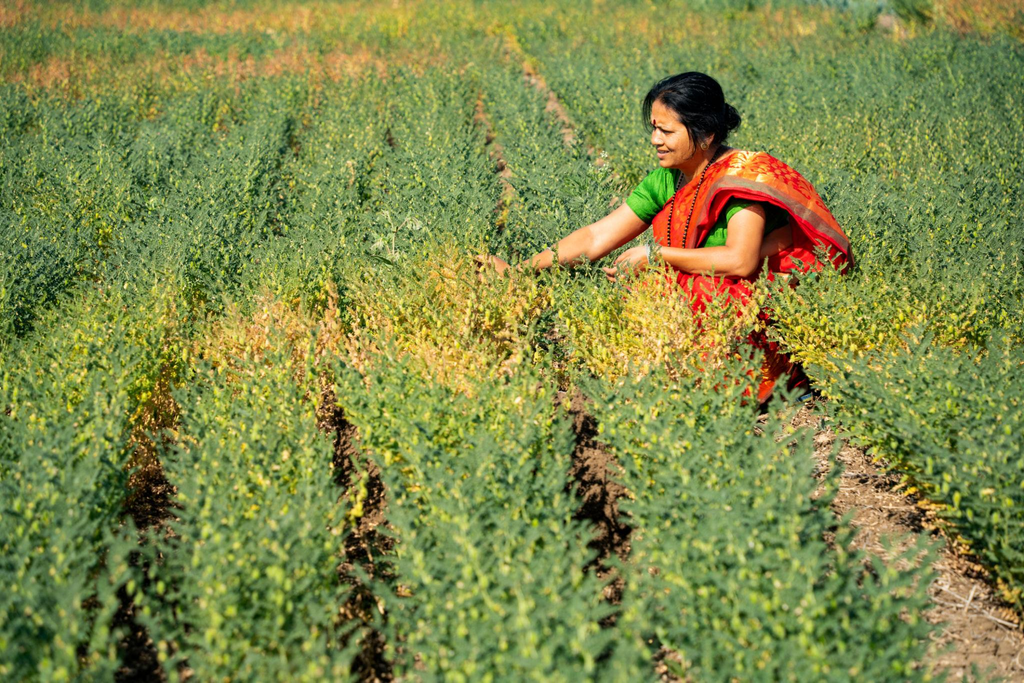
Nearly two crore farmers are expected to benefit directly through improved access to quality seeds, reduced post-harvest losses, value addition, and price assurance. A cornerstone is the large-scale distribution of quality planting material: approximately 88 lakh (or 87.5 lakh) free seed kits will be provided over the six-year period to encourage cultivation in rice-fallow and other diversifiable areas. In addition, 126 lakh quintals of certified seeds will be distributed, covering an estimated 370 lakh hectares by 2030-31. For the Rabi 2025-26 season alone, over 10 lakh seed kits were allocated, with subsequent annual targets ranging from 12.5 lakh to 17.5 lakh kits.
Front-line and cluster demonstrations of improved technologies receive enhanced support of ₹10,000 per hectare (up from ₹9,000 earlier). Training programmes and capacity-building efforts will help farmers adopt modern agronomic practices, integrated nutrient and pest management, and climate-smart techniques.
Post-harvest infrastructure receives major attention. The Mission plans to establish 1,000 processing and packaging units (dal mills) across the country, with a maximum subsidy of ₹25 lakh per unit (or 33 per cent of project cost, whichever is lower). In the first phase, 528 units have already been allotted to States and Union Territories. These units are expected to reduce crop losses, enable local value addition, create rural employment, and raise farmer realisations by capturing a greater share of the consumer rupee. Additional support under complementary schemes such as the Pradhan Mantri Formalisation of Micro Food Processing Enterprises (PMFME) and Pradhan Mantri Kisan SAMPADA Yojana further strengthens the processing ecosystem.
The most transformative benefit for growers of the priority crops is assured procurement. For the next four years, NAFED and NCCF will undertake 100 per cent procurement of Tur, Urad, and Masoor at Minimum Support Price (MSP) under the Price Support Scheme (PSS) of the Pradhan Mantri Annadata Aay Sanrakshan Abhiyan (PM-AASHA) from registered farmers who enter into agreements with these agencies. Procurement of other pulses will continue as per prevailing PSS norms. A mechanism to monitor global pulse prices has been built in to safeguard farmer confidence against international price volatility. Digital verification through Aadhaar-based biometric or facial authentication ensures transparency and prevents leakages.
Collectively, these measures are projected to enhance farmer incomes by 30–40 per cent in participating areas through higher yields, lower losses, better prices, and value addition. Environmental co-benefits include improved soil health, lower water intensity relative to some competing crops, and reduced carbon footprint from climate-resilient practices. At the national level, the Mission is expected to save substantial foreign exchange—estimated in some assessments at around ₹15,000 crore annually once full self-sufficiency is achieved—while stabilising domestic prices and strengthening nutritional security for a predominantly vegetarian population.
Eligibility and Implementation Framework
Eligibility centres on active participation by pulse-growing farmers who register with NAFED, NCCF, or designated state agencies and enter into formal agreements for procurement. Aadhaar-linked authentication is mandatory for registration and claims, ensuring that benefits reach genuine cultivators. Free seed kits and certified seed distribution target farmers in both traditional pulse belts and expansion areas, particularly rice-fallow lands and regions suitable for diversification. Cluster participation is encouraged for demonstrations, input support, and market linkages; minimum cluster sizes apply as noted earlier.
Entrepreneurs, farmer producer organisations (FPOs), cooperatives, and individual micro-enterprises interested in setting up processing units can apply for the subsidy under the Mission’s post-harvest component, subject to state-level allocation and project appraisal. Research institutions and seed-producing agencies at central and state levels are integral to the seed production and distribution chain.
Implementation is coordinated by the Ministry of Agriculture and Farmers Welfare in partnership with state governments, ICAR, Krishi Vigyan Kendras, NAFED, NCCF, and other stakeholders. Annual Action Plans submitted by States and Union Territories guide resource allocation. Progress is monitored through digital platforms, including the SATHI portal for seeds and procurement tracking systems. The Mission operates across 28 States and focuses interventions on high-potential districts while promoting geographic diversification.
Broader Significance and Outlook
Beyond immediate production targets, the Mission for Aatmanirbharta in Pulses aligns with the national vision of Atmanirbhar Bharat by reducing strategic import vulnerability in a critical food group. It complements soil-health and water-conservation goals, generates rural employment in processing and logistics, and supports the protein needs of a growing population. Demand for pulses is projected to rise further in the coming decades; sustained annual production growth of around 2 per cent or more will be required to meet longer-term requirements.
Early indicators, including seed-kit allocations for Rabi 2025-26 and registration of farmers for procurement, signal that operationalisation is underway. Success will depend on effective state-level execution, timely seed availability, robust extension services, and seamless coordination between procurement agencies and farmers. If the targets are met, India will not only close its pulse deficit but also emerge as a more resilient and self-reliant producer of this essential nutritional and agricultural commodity.
The Mission represents a carefully designed, multi-pronged intervention that places farmers at the centre—through quality inputs, technology, infrastructure, and price assurance—while advancing the larger national objective of food and nutritional security. As implementation gathers momentum, its outcomes will be closely watched by policymakers, agronomists, and the farming community alike.
Disclaimer
This news report on the Mission for Aatmanirbharta in Pulses is for general informational purposes only and is based on publicly available government announcements and reports as of the latest available data. Scheme details, including objectives, farmer benefits, eligibility criteria, targets, and implementation guidelines, are subject to change by the Government of India or state authorities. Readers are advised to verify the most current information from official sources such as the Ministry of Agriculture & Farmers Welfare, PIB releases, state agriculture departments, NAFED, NCCF, or the designated scheme portals before taking any action. This content does not constitute official advice, legal guidance, or a guarantee of benefits.