

Kathmandu, October 11, 2026 — Nepali authorities ordered mass evacuations along the Budhi Gandaki River on Sunday after a landslide-triggered flash flood swept through the northern part of Gorkha district, destroying dozens of houses, multiple bridges and damaging a hydropower project camp. The disaster struck in the early morning hours, roughly six weeks after the catastrophic August floods that killed more than 1,450 people and left thousands missing.
A dry landslide in Chumnubri village, approximately 100 km west of Kathmandu, blocked the Budhi Gandaki River, a tributary of the Trishuli. Water and debris built up behind the natural dam before it breached, sending a surge of muddy sludge and rubble downstream. Officials confirmed the flood hit settlements including Painyu, Bagar, Jagat, Salleri, Dovan and Ghattekhola in Chumnubri Rural Municipality.
Damage Assessment
Preliminary reports indicated significant infrastructure losses. Between 35 and 65 houses were swept away, according to varying official and local accounts, with the higher figures coming from later assessments that included structures in both Gorkha and neighbouring Dhading. Several livestock shelters were also destroyed, and at least 15 yaks were reported lost in one incident.
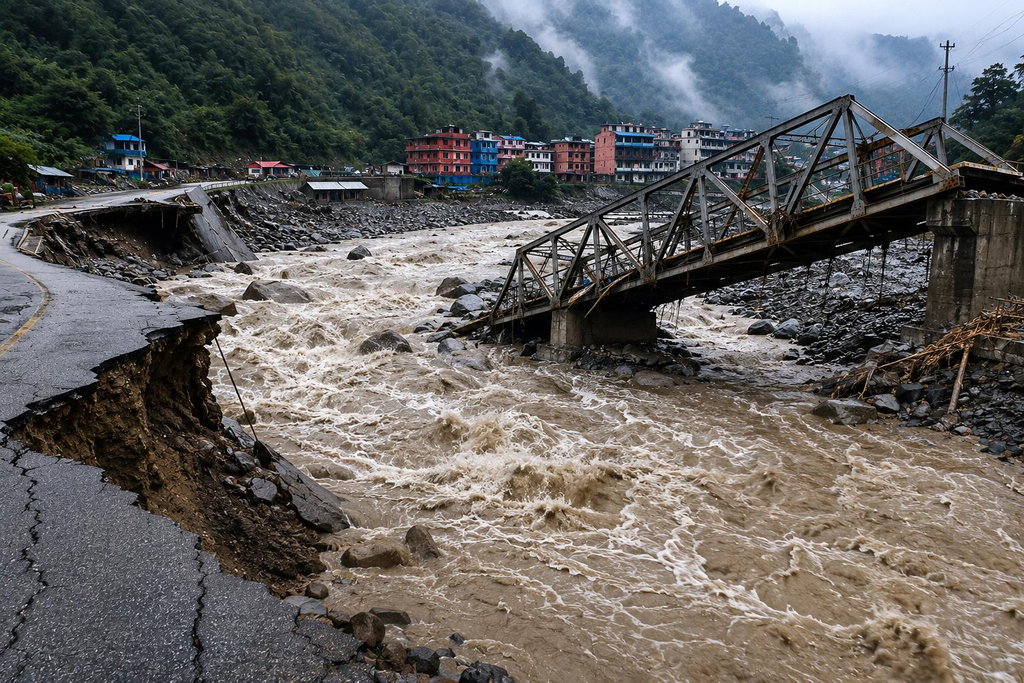
Six bridges were washed away in total — two motorable bridges and four suspension bridges — including critical links such as the highway bridge connecting Gorkha with Dhading district and crossings at Arughat, Tripurasundari and Soti-Manbu. The destruction severed key transport routes, isolating communities and complicating relief efforts. A hydropower project camp sustained damage, though 18 workers there escaped safely before the waters overwhelmed the site. Power and communication towers along the riverside were also affected.
The National Disaster Risk Reduction and Management Authority (NDRRMA) and district officials noted that the flooded river continued to carry heavy sediment, with water levels remaining elevated and posing further risks downstream. Alerts were issued for communities in Gorkha, Tanahun, Chitwan, East Nawalparasi and West Nawalparasi, with particular concern for areas as far as Muglin.
Casualties and Missing Persons
As of Sunday evening, no confirmed deaths had been reported from the Budhi Gandaki flood, a contrast to the scale of the August disaster. However, between five and ten people were listed as missing, primarily from Gorkha district. One report linked some of the missing to a landslide that destroyed cattle sheds, while others remained unaccounted for after the river surge. Search operations were ongoing, with authorities still compiling the full extent of the impact.
Rescue and Evacuation Operations
The Nepal Army, Armed Police Force and local security personnel were rapidly deployed. Prime Minister Balendra Shah confirmed that army teams were sent by both air and land routes for search and rescue. Six people were airlifted from the landslide-prone Jagat area. By Sunday afternoon, the army reported rescuing between 36 and 49 people using helicopters and ground teams, with figures varying slightly across official statements as operations continued.
District Chief Officer Dharmendra Kumar Mishra stated that villagers living along the riverbanks had been urged to move to safer ground immediately. Home Minister Sudan Gurung issued broader evacuation orders for riverside residents in Sirdibas, Khorlabesi, Arughat and further downstream, directing those needing help to contact the Ministry of Home Affairs emergency line. A Joint Rapid Response Team from Kathmandu was also dispatched to support local efforts.
The NDRRMA maintained a high alert through the evening, monitoring river levels and coordinating with meteorology officials. Helicopters remained active for both rescues and aerial assessments of the damage.
Broader Context: The August Catastrophe
Sunday’s flash flood occurred against the backdrop of Nepal’s ongoing recovery from the devastating events of August 26, 2026. On that day, a major avalanche and glacier collapse near the China-Nepal border triggered a massive debris flow and flash flood along the Bhote Koshi–Trishuli river corridor. The torrent devastated settlements in Rasuwa, Nuwakot, Dhading and further downstream, destroying or damaging dozens of bridges, roads, hydropower facilities and thousands of homes.
Official figures from the NDRRMA put the death toll from the August disaster at approximately 1,450 to 1,497, with more than 5,200 still listed as missing as of early October. Over 13,700 people were rescued in the intensive search phase, which the government formally wound down in early October to shift focus toward rehabilitation and reconstruction. The Rapid Damage and Needs Assessment estimated physical damage and economic losses in the billions, with reconstruction costs projected at around $4.77–4.78 billion.
Many of the missing from August were workers trapped in hydropower tunnels, pilgrims and tourists near the border, and residents of riverside villages. International teams from India, China and other countries assisted in earlier rescue and forensic identification efforts. The Budhi Gandaki, which joins the Trishuli system, sits downstream from the earlier disaster zone, heightening concerns about cumulative vulnerability in the region.
Government Response and Challenges
Authorities emphasised preparedness lessons from August while mobilising for the new emergency. The government has already allocated significant resources for reconstruction of roads, bridges and housing in previously hit districts. However, the fresh damage to connectivity in Gorkha and Dhading risks slowing those efforts and delaying aid to remote communities still recovering from the earlier floods.
Local officials and the NDRRMA stressed that the landslide-dam scenario is a recurring risk in Nepal’s steep Himalayan terrain, particularly during or after the monsoon period. Heavy rainfall in preceding days in various parts of the country had already contributed to landslides and localised flooding elsewhere, though the Budhi Gandaki event was specifically attributed to the river blockage rather than widespread rain.
Residents in affected areas described sudden rises in the river and the rapid loss of homes and pathways. Social media videos circulating Sunday showed the swollen, debris-laden river racing through mountain valleys and structures being carried away. Officials urged the public to heed evacuation notices and avoid riverbanks until the all-clear was given.
Looking Ahead
As of late Sunday, search teams continued looking for the missing while monitoring for any secondary landslides or further rises in water levels. Downstream communities remained on alert. The government faces the dual challenge of managing the immediate crisis and sustaining the long-term recovery from August, including restoring livelihoods, rebuilding critical infrastructure and improving early-warning systems for glacial lake and landslide-dammed floods.
Nepal’s mountainous geography and dense network of rivers make it highly susceptible to such cascading disasters. Sunday’s events serve as a stark reminder that the recovery period remains fragile, with communities still living with the trauma and material losses of the summer catastrophe now confronting new threats along the same river systems.
Authorities have called for continued vigilance, coordination among security forces, and public cooperation with evacuation orders. Further updates on casualties, missing persons and damage assessments were expected as ground teams complete surveys in the hard-to-reach affected wards. The coming days will determine whether the Budhi Gandaki flood remains a contained local disaster or escalates into a wider emergency requiring expanded national and international support.