

New Delhi | October 14, 2026
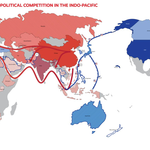
In the vast expanse of the Indo-Pacific—a region spanning from the eastern shores of Africa to the western coasts of the Americas, encompassing critical sea lanes that carry nearly 75 per cent of global trade and half of the world’s daily oil supplies—the balance of power is undergoing a profound realignment. At the heart of this transformation stands India, a nation that has steadily elevated itself from a regional power focused primarily on its South Asian neighbourhood to a pivotal actor shaping the strategic architecture of Asia. As China’s naval reach expands, the United States recalibrates its global posture, and middle powers seek greater agency, New Delhi’s choices are increasingly determining whether the Indo-Pacific evolves into a multipolar order defined by strategic autonomy or drifts toward sharper bipolar competition.
India’s emergence as Asia’s only “major power” in the Lowy Institute’s Asia Power Index 2025—crossing the 40-point threshold for the first time and ranking third overall behind the United States and China—marks a significant milestone. This recognition reflects not merely economic growth or military modernisation, but a deliberate, multi-dimensional strategy that blends defensive preparedness with proactive diplomacy, maritime domain awareness with economic statecraft, and partnerships that enhance options without sacrificing independence.
The Strategic Geography of the Indo-Pacific
The Indo-Pacific concept itself is relatively recent in official discourse, crystallising in the 2010s as a response to China’s rising assertiveness. For India, the region is both opportunity and imperative. The Indian Ocean, long regarded as India’s natural sphere, is no longer insulated from Pacific dynamics. Chinese naval deployments, port access agreements, and undersea surveillance capabilities have compressed distances, turning the Strait of Malacca, the Bab el-Mandeb, and approaches to the Persian Gulf into potential flashpoints in any future crisis.
India’s response has been grounded in geography. The Andaman and Nicobar Islands, positioned astride the western approaches to the Malacca Strait, have been transformed into a strategic forward base. Investments in runways, logistics, and surveillance infrastructure allow New Delhi to monitor and, if necessary, contest maritime traffic. Partnerships with Mauritius—including a satellite monitoring station in the Chagos Archipelago and the operational base on Agaléga—extend this reach deeper into the western Indian Ocean. These moves form part of a broader effort to convert geographic advantage into strategic depth without matching China ship-for-ship.
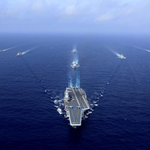
China’s People’s Liberation Army Navy continues its expansion, with growing presence in the Indian Ocean Region through dual-use ports in Sri Lanka, Pakistan, and Djibouti. Analysts note that the trajectory, rather than the current order of battle, is what concerns Indian planners. Maritime competition of this nature is measured in decades. India’s answer centres on a combination of sea control in its near waters and sea denial farther afield, supported by submarines, maritime patrol aircraft, long-range strike capabilities, and enhanced partnerships.
From Look East to Act East and Beyond
India’s engagement with Southeast Asia provides the historical foundation for its current Indo-Pacific posture. The Look East Policy of the early 1990s, born of post-Cold War economic necessity, evolved under Prime Minister Narendra Modi into the more assertive Act East Policy. This shift added security, connectivity, and strategic dimensions to what had been primarily commercial outreach.
Today, ASEAN centrality remains a stated pillar of India’s approach. Defence Minister Rajnath Singh, addressing the first ASEAN-India Defence Think Tank Forum in New Delhi on October 14, 2026, reaffirmed that India seeks an Indo-Pacific in which all countries—large and small—can make their own choices, protect their interests, and pursue development in peace. He emphasised joint research on maritime security, counter-drone systems, cyber defence, and disaster response, underscoring that regional challenges demand collective rather than unilateral solutions.
Concrete outcomes have followed. India has supplied BrahMos supersonic cruise missiles to the Philippines in multiple batches and advanced similar discussions with Indonesia. Training of Vietnamese forces at Cam Ranh Bay, cooperation on Sabang Port development near the Malacca approaches, and regular joint exercises with Southeast Asian navies have expanded India’s operational footprint. The Kaladan Multi-Modal Transit Transport Project and the India-Myanmar-Thailand Trilateral Highway continue to inch forward as physical manifestations of Act East connectivity, even as political instability in Myanmar complicates timelines.
Japan has emerged as a particularly close partner in this endeavour. Tokyo has backed plans to link India’s Northeast—viewed as a gateway to Southeast Asia—with the Bay of Bengal and the wider Indian Ocean through multimodal corridors. The Japan-India AI Initiative and cooperation on critical minerals, Shinkansen technology, and defence systems such as the UNICORN antenna further deepen the partnership. Australia, in its National Defence Strategy 2026, designated India a “top-tier security partner” and its most important defence partner in the Northeast Indian Ocean, prioritising practical cooperation in maritime security and logistics.
The Quad and the Architecture of Partnership
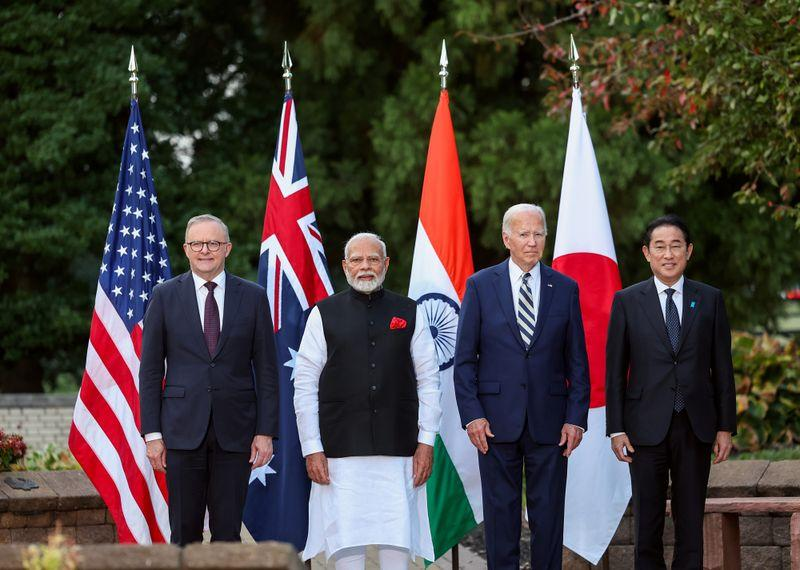
No element of India’s Indo-Pacific strategy has attracted more attention—or more scrutiny—than the Quadrilateral Security Dialogue. Comprising India, the United States, Japan, and Australia, the Quad has matured from a loose consultative mechanism into a platform for tangible initiatives.
The May 2026 Quad Foreign Ministers’ Meeting in New Delhi produced several concrete deliverables. Partners launched the Indo-Pacific Maritime Surveillance Collaboration to enhance information sharing and maritime domain awareness, with an initial focus on the Indian Ocean. They established a Quad Critical Minerals Initiative Framework, pledging up to $20 billion in public and private capital for mining, processing, and recycling, while expressing “grave concerns” over economic coercion and non-market practices—language widely understood as directed at China’s dominance in rare earths and related supply chains. India positioned itself as a potential processing and recycling hub within this framework.
Additional measures included the Quad-at-Sea Ship Observer Mission, counterterrorism workshops focused on unmanned aerial vehicles and emerging technologies, and commitments on ports of the future and logistics networks. These steps reflect a deliberate effort to move beyond statements of principle toward operational cooperation that strengthens collective resilience without formal alliance obligations.
India has been careful to frame its Quad participation within a broader multi-alignment strategy. New Delhi continues to engage with BRICS, the Shanghai Cooperation Organisation, and other platforms that include China and Russia. Critics sometimes argue that simultaneous membership dilutes Indo-Pacific objectives. Officials counter that the opposite is true: a wider set of relationships multiplies options and reduces the risk of over-dependence on any single partner. Strategic autonomy remains the guiding principle. As External Affairs Minister S. Jaishankar has repeatedly emphasised, a strategic partnership is not an alliance.
The China Factor: Border, Ocean, and Competition
China remains the central variable in India’s strategic calculus. The deadly Galwan Valley clash of June 2020 marked a watershed, ending decades of carefully managed border peace and triggering a comprehensive reappraisal of the relationship. Troop deployments surged along the Line of Actual Control. India banned numerous Chinese apps, tightened investment scrutiny, and accelerated military modernisation and infrastructure construction in the border regions.
By late 2024, the two sides completed disengagement from the remaining friction points under an agreement that restored the pre-2020 status quo in key locations. Direct flights resumed, the Kailash Mansarovar Yatra restarted, and visa processes eased. In August 2026, National Security Adviser Ajit Doval and Chinese Foreign Minister Wang Yi, serving as Special Representatives, held the 25th round of boundary talks in Beijing. They agreed to identify less contentious sections for potential early harvest delimitation, establish additional military hotlines and meeting points, and strengthen mechanisms to manage incidents.
Chinese President Xi Jinping’s visit to India for the BRICS Summit in September 2026—his first in nearly seven years—symbolised the cautious thaw. Yet fundamental differences persist. Substantial military deployments remain on both sides of the LAC. Satellite imagery has continued to show Chinese infrastructure expansion in contested areas of Arunachal Pradesh. Trade remains heavily imbalanced, with India’s deficit exceeding $100 billion in recent years and critical dependence on Chinese inputs for electronics, machinery, and other sectors. New Delhi has cautiously reopened limited investment channels while prioritising diversification of supply chains.
Beyond the land border, the China-Pakistan strategic relationship constitutes a persistent concern. Indian analysts describe a “threshold alliance” that complicates planning for a potential two-front contingency. Peacetime military cooperation, technology transfers, and coordinated grey-zone activities create a reinforced challenge even if Beijing avoids direct involvement in a South Asian conflict. National Security Adviser Ajit Doval has publicly noted that India faces two nuclear-armed neighbours that share a strategic relationship and an adversarial view of New Delhi.
In the maritime domain, China’s expanding presence in the Indian Ocean has heightened urgency. Indian assessments emphasise the need for accelerated fleet modernisation—destroyers, frigates, next-generation corvettes, submarines, and maritime patrol aircraft—alongside deeper partnerships with littoral states. The goal is not parity with the PLA Navy across the entire Indo-Pacific, but sufficient capability to maintain favourable balances in the Indian Ocean and to contribute meaningfully to collective efforts farther afield.
Economic Dimensions and Supply Chain Resilience
Strategic competition in the Indo-Pacific is inseparable from economics. Critical minerals, rare earths, semiconductors, and advanced manufacturing have become arenas of contestation. The Quad’s $20 billion minerals framework represents one response. India-US bilateral agreements on critical minerals and rare earths, signed on the sidelines of the May 2026 meeting, complement this effort.
India’s economic performance underpins its rising power scores. Strong growth, a large domestic market, and demographic advantages position it as an attractive alternative manufacturing and processing destination. Yet challenges remain: infrastructure gaps, regulatory complexity, and the need to convert economic weight into sustained influence across the region. Partnerships with Japan on Northeast connectivity, with Australia on energy and defence industry, and with ASEAN on trade and investment are designed to address these gaps while embedding India more deeply in regional value chains.
Multi-Domain Challenges and Future Trajectories
Indian strategic thinking has evolved beyond traditional two-front land scenarios. Contemporary assessments emphasise a single battlespace spanning land, air, maritime, cyber, electromagnetic, space, and information domains. The next conflict, planners warn, may begin on a border but rapidly expand into contests for satellite access, communications networks, and maritime freedom of manoeuvre. Multi-domain resilience—forces capable of operating across domains, commanders trained to think across them, and national security architecture able to absorb disruption—has become the new imperative.
Looking ahead, several variables will shape India’s role. The trajectory of US policy under successive administrations will influence the depth and reliability of Quad cooperation. China’s domestic economic pressures and external assertiveness will determine the intensity of competition. ASEAN’s ability to maintain centrality and resist great-power coercion will affect the space available for Indian initiatives. Domestic Indian capacity—defence industrial production, infrastructure delivery, and political consensus on long-term strategy—will ultimately decide how effectively New Delhi converts potential into power.
India’s approach remains one of maximising options rather than locking into rigid alignments. It seeks a multipolar Asia in which countries retain the freedom to choose, rather than a unipolar Asia dominated by any single power. Whether this vision can be sustained amid intensifying great-power rivalry is the central question of the coming decade.
For now, New Delhi is building the tools of influence: a more capable navy and air force, denser partnerships across the Indo-Pacific, stronger economic linkages, and institutional mechanisms for maritime awareness and crisis management. The balance of power in Asia is shifting. India’s strategic role is no longer peripheral to that shift—it is increasingly central to determining its direction and character.
In the words of one senior Indian strategist, the task is not merely to respond to a changing order, but to help shape it. That ambition, measured against the realities of power and the constraints of geography, will define India’s place in the Indo-Pacific for years to come.