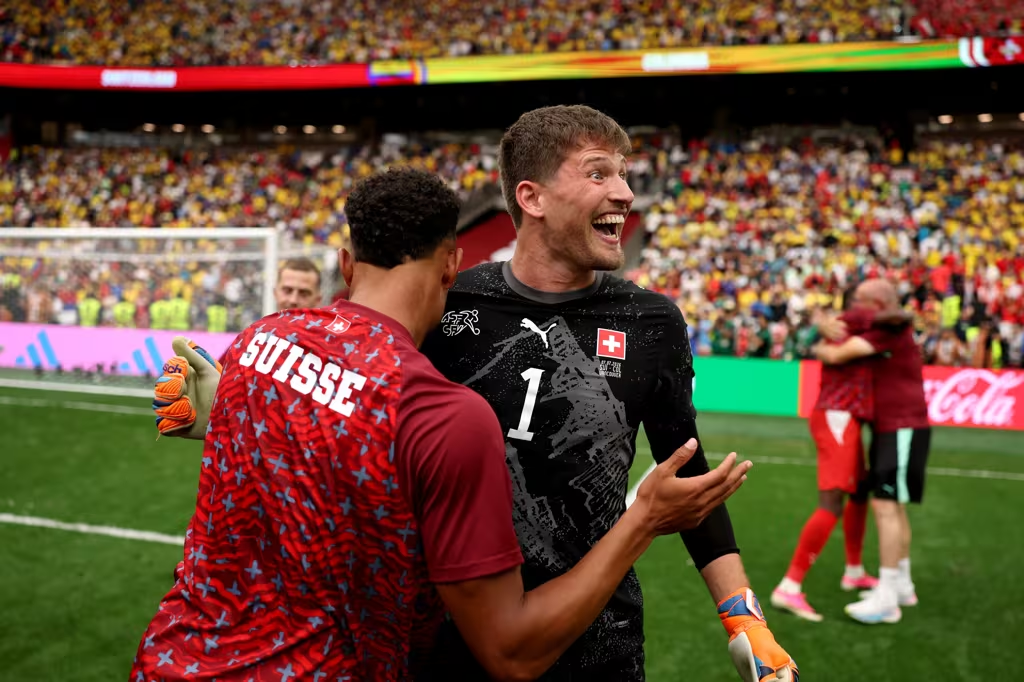
Switzerland Stuns Colombia in Penalty Drama: Swiss Advance to World Cup 2026 Quarterfinals as La Tricolour’s Dream Ends in Vancouver
Vancouver, Canada – July 7, 2026 — In a tense, goalless battle of attrition at BC Place Stadium, Switzerland defeated Colombia 4-3 on penalties to advance to the FIFA World Cup 2026 quarterfinals for the first time since 1954. After 120 minutes of disciplined defending, tactical chess, and missed opportunities, it was the cool-headed precision of the Swiss in the shootout that proved decisive. Ruben Vargas slotted home the winning penalty, sending Murat Yakin’s side into a tantalising clash with Argentina, while Néstor Lorenzo’s Colombians were left to contemplate an early exit despite entering as one of the tournament favourites.
The match was billed as a clash of styles: Colombia’s flair and attacking pedigree against Switzerland’s legendary organization and resilience. What unfolded was a masterclass in defensive structure from both sides, with few clear-cut chances and a game that increasingly favored the team better equipped for the grind. Gregor Kobel emerged as the hero for Switzerland, producing a crucial save on Cucho Hernández in the shootout, while Colombia’s usually reliable finishers faltered from the spot.
The Road to Vancouver: Form, Expectations, and Context
Colombia arrived in the knockout stage with high hopes. Under Lorenzo, La Tricolour had been one of the most consistent teams in CONMEBOL qualifying and carried momentum into the group stage. With stars like Luis Díaz, James Rodríguez (in a supporting role), and a solid defensive core featuring Davinson Sánchez and Jhon Lucumí, many analysts tipped them for a deep run. Their group stage progression, including a narrow win over Ghana, showcased both resilience and attacking potential, though critics noted a lack of clinical finishing.
Switzerland, meanwhile, quietly went about their business. Coached by the pragmatic Yakin, the Nati emphasised compactness, set-piece threat, and counter-attacking efficiency. Key players included captain Granit Xhaka, who anchored midfield with experience and leadership; defenders Manuel Akanji and Nico Elvedi; and attackers like Dan Ndoye, Fabian Rieder, and Ruben Vargas. A pre-match blow came with the injury to breakout star Johan Manzambi, forcing adjustments that tested the squad’s depth.
The two nations have a limited but respectful footballing history. Prior encounters were competitive, with Colombia holding a slight edge, but this was their first World Cup meeting. Off the pitch, Switzerland and Colombia share deep bilateral ties that added layers of goodwill to the occasion. Diplomatic relations date back to 1908 with the Treaty of Friendship and Commerce. Switzerland has been a consistent partner in Colombia’s peace process, providing support for the 2016 peace agreement with FARC, humanitarian aid, and economic cooperation programs like Colombia + Competitiva, focused on sustainable growth and innovation. Trade flows involve Swiss pharmaceuticals, machinery, and watches exchanged for Colombian precious stones, metals, and agricultural products. Swiss investments in Colombia exceed CHF 5 billion.
This sporting encounter thus symbolised friendly rivalry between two nations connected by more than just a football pitch.
Match Breakdown: A Tactical Lockdown
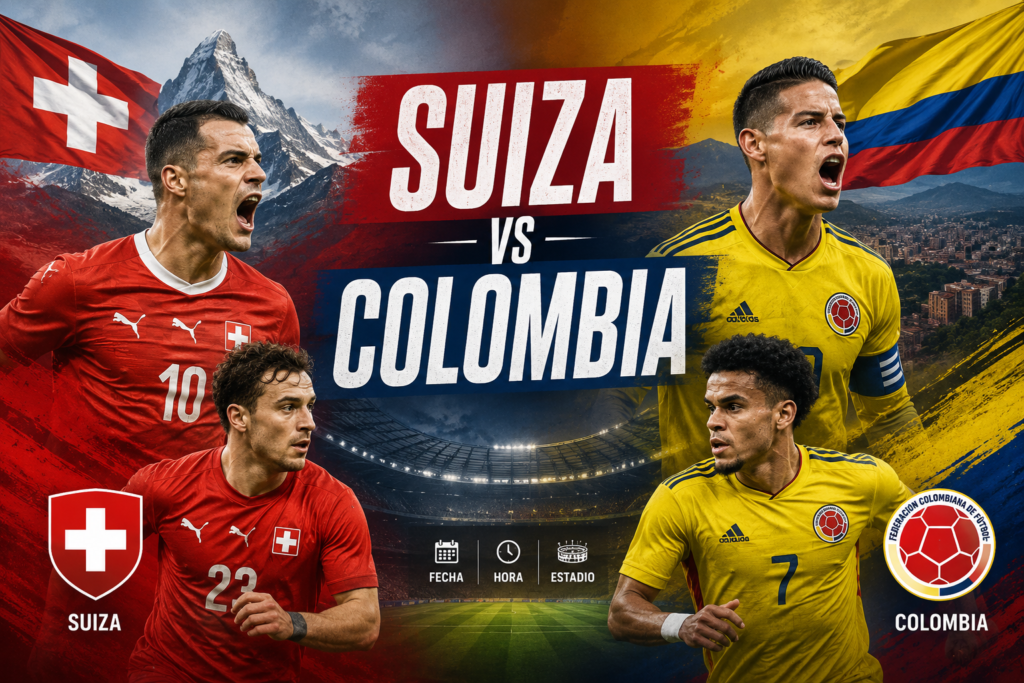
From the opening whistle, the game was cagey. Switzerland set up in a compact 4-2-3-1, prioritising midfield control and denying space to Colombia’s creative players. Colombia, in a 4-4-1-1 or similar fluid setup, probed with width through Luis Díaz and attempted to unlock the Swiss defence with quick combinations involving Rodríguez and forward players.
First Half: Colombia enjoyed more possession and territorial dominance, but clear chances were scarce. Camilo Vargas in the Colombian goal was called into action early, making smart saves on efforts from Ndoye and Rieder. Switzerland’s defence, marshalled by Akanji and Elvedi, was imperious, winning most duels and limiting Díaz’s influence. The hydration break around the 30-minute mark saw the game open slightly, but neither side could capitalise. Xhaka’s experience was vital in breaking up play, while Colombia’s midfield pressed high without creating sustained threats. Half-time: 0-0.
Second Half and Extra Time: The pattern continued. Colombia pushed harder, introducing fresh legs to increase intensity, but Switzerland’s organisation held firm. Defenders on both sides shone: Sánchez and Lucumí for Colombia neutralised aerial threats and through balls effectively. Switzerland created occasional counters, but finishing let them down. In the 115th minute, a rare error from Xhaka gifted Jaminton Campaz a golden opportunity, only for the Colombian to blaze over—an agonising miss that could have changed everything.
Extra time brought fatigue and more caution. Substitutions aimed at fresh legs for penalties, but the score remained locked. Both teams showed immense discipline, with few bookings despite intense duels. The goalless draw reflected two well-drilled units unwilling to overcommit.
The Penalty Shootout: Nerves, Heroes, and Heartbreak
Penalties at a World Cup are the ultimate test of nerve. Colombia went first in some accounts, but the sequence saw high drama.
- Switzerland’s takers, including Xhaka, Zeki Amdouni, Cedric Itten, and Vargas, largely held their composure. Xhaka’s penalty was nervy but found the net.
- Colombia’s efforts faltered. Davinson Sánchez missed, and crucially, Cucho Hernández was denied by a superb Kobel save. Luis Díaz converted, but it wasn’t enough.
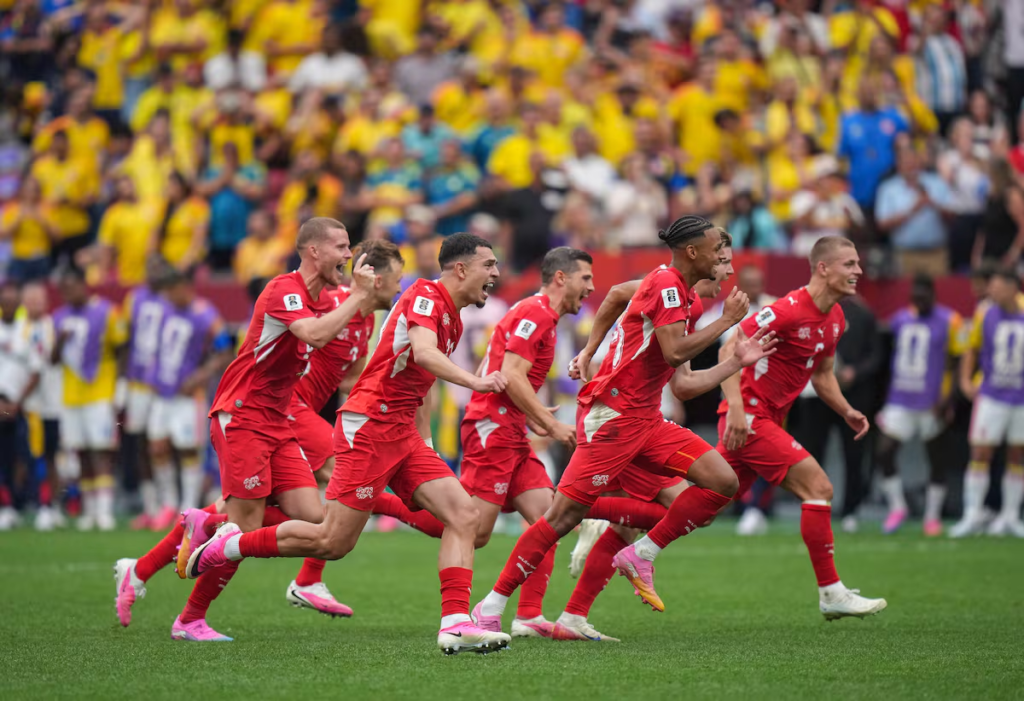
Ruben Vargas stepped up last for Switzerland, sending Camilo Vargas the wrong way to seal a 4-3 victory. Jubilation for the Swiss bench and fans; devastation for Colombia, whose players collapsed in disbelief.
Post-Match Reactions:
Granit Xhaka: “From the coaching staff to the last player, we can all be proud of what we’ve achieved. This is a historic night for Swiss football.”
Néstor Lorenzo expressed pride in his team’s effort but acknowledged the disappointment of exiting on penalties: Colombia played “better football” in stretches but paid for missed opportunities.
Murat Yakin praised his team’s resilience and Kobel’s heroics, looking ahead to Argentina: “We respect Messi and company, but we’ve shown we can compete with anyone.”
Tactical Analysis and Key Performers
Switzerland’s success stemmed from defensive solidity and shootout preparation. Kobel’s distribution and shot-stopping were pivotal. The central defensive pairing of Akanji and Elvedi neutralised Colombia’s threats. Midfield control by Xhaka and others limited transitions. Vargas’s ice-cold finish capped a strong tournament showing.
For Colombia, individual brilliance was evident but insufficient. Luis Díaz was dangerous on the wing but contained. The defence performed admirably, but profligacy in front of the goal and penalty woes proved costly. Stars like James Rodríguez brought experience, yet the team struggled to convert dominance into goals.
Broader Implications for Both Teams and the Tournament
For Switzerland, this is uncharted territory. Reaching the last eight revives memories of their 1954 campaign and boosts national morale. Facing Argentina next presents a monumental challenge but also an opportunity to showcase growth. The result underscores the value of tactical discipline over pure talent in knockout football.
Colombia’s exit will spark debate. Despite strong underlying performances, early elimination highlights the need for greater ruthlessness. The squad has talent for future success, and the experience gained will serve them in upcoming cycles. Fans in Colombia, known for passionate support, will feel the sting but rally behind the process.
The Switzerland-Colombia Relationship: Beyond the Pitch
This match highlighted the warm relations between the two countries. Switzerland’s long-standing support for Colombia’s peace efforts—including roles in negotiations with groups like the ELN and implementation of the 2016 accord—adds depth to their rivalry. Economic ties, development cooperation, and cultural exchanges (such as the Helvetia School in Bogotá) foster mutual respect.
In Vancouver, the atmosphere blended competition with camaraderie, a testament to football’s ability to unite even as it divides in the moment of truth.
Looking Ahead
Switzerland prepares for a quarterfinal showdown against Lionel Messi’s Argentina in Kansas City—a match that promises fireworks. Colombia returns home to regroup, with eyes on Copa América and the next World Cup cycle.
This encounter will be remembered as a classic knockout grinder decided by the finest of margins. Switzerland’s penalty prowess wrote a new chapter in their footballing history, while Colombia’s exit, though painful, reflects the brutal beauty of the World Cup.
===