
October 25, 2026
Global oil markets closed the week on edge as escalating violence across the Middle East drove benchmark crude prices to their highest levels in nearly six months. Brent crude futures settled at $116.72 a barrel on Friday, October 23, up more than $3 and marking the strongest close since late April. U.S. West Texas Intermediate climbed to $103.27. The rally reflected fresh fears that Iran-backed Houthi strikes on Saudi energy infrastructure, combined with ongoing threats to shipping in and around the Strait of Hormuz, could once again disrupt supplies from the world’s most important oil-exporting region.
The current phase of the crisis forms part of a broader conflict that began earlier in 2026 with U.S. and Israeli military action against Iran. Nearly nine months later, the war has refused to end. Oil prices, which peaked above $126 a barrel in the spring before retreating toward $70 in the summer amid hopes of de-escalation, have climbed steadily again as diplomatic efforts stalled and kinetic activity intensified. Year-to-date, Brent has risen more than 85 per cent, a stark illustration of how regional instability continues to dominate energy markets.
Recent Escalation: Houthis, Saudi Arabia, and the Gulf
The immediate catalyst for the latest price surge came from a series of Houthi attacks inside Saudi Arabia. The Iran-aligned group claimed responsibility for strikes on energy targets, including an oil field where two people were killed, as well as civilian infrastructure such as Dammam’s airport. Explosions and drone activity prompted Saudi Aramco, the world’s largest oil company, to order the evacuation of its headquarters in Dhahran and instruct staff to work remotely. Fighting between the Houthis and the Saudi-led coalition, which backs Yemen’s internationally recognised government, has intensified near the Bab el-Mandeb strait, another critical shipping chokepoint at the mouth of the Red Sea.
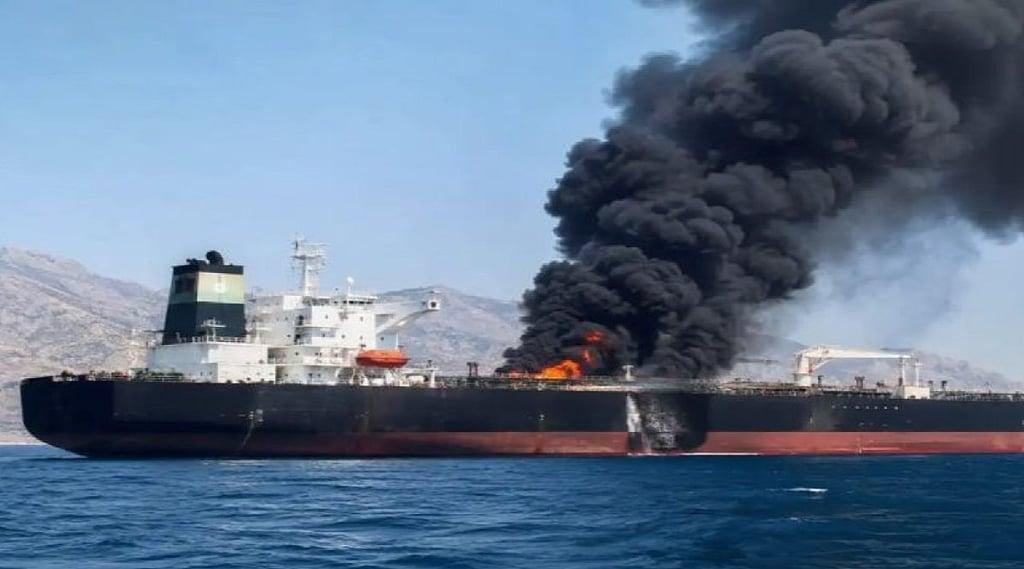
Simultaneously, Iran’s Islamic Revolutionary Guard Corps reported that it had targeted vessels involved in what it described as illegal oil transfers in the northern Gulf. Several ships were said to have caught fire, while others reportedly struck mines west of the Strait of Hormuz. The IRGC issued warnings that continued provocations could lead to wider responses against U.S. regional bases. These incidents compounded an already elevated risk environment. Shipping data from firms tracking vessel movements indicated a sharp uptick in attacks on tankers in recent weeks, extending beyond the strait itself into the Gulf of Oman.
An oil spill detected off the UAE coast of Umm Al Quwain added another layer of uncertainty, though authorities did not immediately identify the cause or the vessel involved. Collectively, these developments forced markets to reprice the probability of a meaningful interruption to Middle Eastern crude exports.
The Strategic Importance of the Strait of Hormuz
The Strait of Hormuz remains the central vulnerability. In normal times, roughly one-fifth of global oil supply—approximately 15 to 20 million barrels per day of crude and refined products—passes through this narrow waterway between Iran and Oman. When the conflict erupted earlier this year, Iranian actions and the resulting insurance and security environment effectively constrained traffic for extended periods. Prices spiked as producers were forced to cut output or store oil they could not export.
Over the summer and into early autumn, adaptive measures partially restored flows. Gulf producers increased use of overland pipelines, including Saudi Arabia’s East-West pipeline to the Red Sea, while U.S. naval escorts and “dark” transits (ships operating with transponders off) helped move barrels to waiting tankers in the Gulf of Oman. By some estimates, Middle East crude exports recovered to around 17 million barrels per day in recent weeks, and overall regional oil flows, including via the Red Sea and Gulf of Oman, even exceeded pre-war averages at times.
Yet recovery has proven fragile. Elevated freight rates—supertanker day rates from the Gulf to Asia have at times exceeded $1 million—have raised the delivered cost of crude dramatically. Product shipments, particularly diesel and other refined fuels, have remained more constrained than crude. Inventory drawdowns have continued in key consuming regions. The International Energy Agency has repeatedly cautioned that energy markets are unlikely to return to normal in 2027, citing the risk of overlapping crises and the sheer volume of lost exports accumulated since the war began.
Transmission Channels to Global Prices
Regional tensions affect oil prices through several interlocking channels. The most direct is physical supply disruption. Any sustained reduction in exports from Saudi Arabia, the UAE, Iraq, Kuwait, or Iran itself immediately tightens the global balance. Saudi Arabia alone accounts for a large share of the world’s spare production capacity; attacks that force field shutdowns or pipeline closures remove barrels that cannot easily be replaced elsewhere in the short term.
The second channel is risk premium. Even when barrels continue to flow, the market prices in the possibility of sudden interruption. Traders and refiners demand compensation for the higher probability of delayed cargoes, higher insurance costs, and potential force majeure events. This premium has kept futures elevated even during periods when actual export volumes looked relatively healthy.
A third channel operates through refined products. Diesel and jet fuel markets have been particularly tight. Ukrainian attacks on Russian refining capacity have compounded shortages originating in the Middle East. Governments have responded by tapping strategic reserves and encouraging higher refinery runs, but these measures only partially offset the structural tightness. Higher product prices feed back into crude demand as refiners adjust operations and consumers face elevated fuel costs.
Finally, secondary effects on demand and the broader economy matter. Prolonged high energy prices act as a tax on households and industry, potentially slowing global growth and eventually reducing oil consumption. At the same time, they encourage substitution, efficiency measures, and accelerated investment in non-Middle Eastern supply. The net near-term effect, however, has been supportive of prices.
Broader Geopolitical Context and Political Calendar
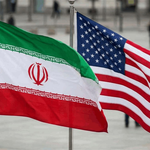
The oil market’s sensitivity is heightened by the political calendar. U.S. midterm elections are approaching, and analysts have noted that meaningful de-escalation appears unlikely until after those votes. President Donald Trump has made public comments suggesting the United States has “knocked” Iran and could go further, while reports indicate contingency planning for renewed strikes. Iranian officials, for their part, have signalled readiness for asymmetric responses and have dismissed prospects for productive dialogue under current conditions.
The conflict has also expanded geographically. Houthi operations in Yemen and the Red Sea, Iranian activity in the Gulf, and related tensions involving Hezbollah and other actors create multiple flashpoints. Each new incident raises the chance of miscalculation that could close critical waterways or damage major production facilities.
Diplomatic efforts have repeatedly faltered. Memorandums of understanding and mediation attempts have collapsed, leaving the market without a clear pathway to reduced risk. The IEA’s executive director has expressed concern about overlapping crises and their potential to further escalate the situation with serious implications for energy markets.
Market Mechanics and Near-Term Outlook
Technically, Brent has traded in overbought territory at times during the recent advance, yet selling pressure has remained limited. Physical market signals are mixed: recovered export volumes and some inventory builds in certain locations exert downward pressure, while the persistent risk of sudden disruption and elevated freight costs support prices. Analysts at major banks and trading houses have emphasised that the risk premium is likely to remain elevated until credible de-escalation materialises.
Longer-dated contracts have also firmed, reflecting a market that now anticipates higher prices for longer rather than a quick return to pre-war conditions. This shift has implications for inflation expectations, central bank policy, and the fiscal positions of both oil-importing and oil-exporting nations.
Spare capacity outside the Middle East is limited. U.S. shale production responds to price signals but cannot instantly fill multi-million-barrel gaps. Strategic petroleum reserves provide a temporary buffer, as demonstrated by emergency authorisations in recent weeks, yet repeated drawdowns deplete the very stocks designed for major crises.
Implications for Consumers, Industry, and Policy
For consumers, the most visible impact is at the pump and in heating bills. Higher crude prices translate, with varying lags and magnitudes, into higher gasoline, diesel, and jet fuel costs. Diesel strength has been especially pronounced, affecting trucking, agriculture, and manufacturing. Airlines face elevated fuel expenses that eventually influence ticket prices or capacity decisions.
Industrial users of petrochemical feedstocks confront higher input costs. Emerging economies that rely heavily on imported oil face particularly acute pressures on current accounts, currencies, and inflation. Advanced economies experience more muted but still material effects through transportation and manufacturing.
Policymakers face difficult trade-offs. Releasing strategic stocks can calm markets temporarily but reduces insurance against future shocks. Encouraging domestic production or alternative energy sources takes time. Diplomatic engagement aimed at reducing Middle East tensions remains the most powerful long-term lever, yet progress has proven elusive.
Historical Parallels and Structural Vulnerabilities
The current episode echoes earlier oil shocks linked to Middle East conflict—the 1973 embargo, the 1979 Iranian Revolution, the 1990 Iraqi invasion of Kuwait, and the more limited disruptions of the 2019 attacks on Saudi facilities. What distinguishes the present situation is the duration of elevated risk and the simultaneous strain on multiple chokepoints (Hormuz and Bab el-Mandeb). The world has also become more interdependent in energy trade, while the concentration of spare capacity in the Gulf has left limited buffers.
At the same time, the energy system has evolved. The growth of U.S. production, the rise of LNG, and the gradual expansion of renewables provide some insulation. Yet oil remains indispensable for transportation and petrochemicals, and no rapid substitute exists for the volumes that flow through the Persian Gulf.
Looking Ahead
As of late October 2026, the dominant narrative in oil markets is one of persistent geopolitical risk rather than imminent supply collapse or surplus. Flows have shown resilience, but the cost of that resilience—higher freight, higher insurance, higher risk premia—is embedded in prices near multi-month highs. Further Houthi or Iranian actions, any significant damage to Saudi or UAE infrastructure, or a renewed major escalation involving U.S. or Israeli forces against Iran would likely push prices higher still. Conversely, a credible ceasefire framework or sustained period of reduced attacks could allow the risk premium to erode, though the accumulated inventory deficit and product tightness would take time to resolve.
For now, traders, refiners, and policymakers are watching the same indicators: vessel tracking data in the Gulf and Red Sea, statements from Riyadh, Tehran, and Washington, and the trajectory of product cracks. The Middle East crisis has already rewritten the 2026 oil price script. How regional tensions evolve in the coming weeks will determine whether the current elevated levels represent a plateau or merely another staging post on a still-rising path.
The global economy continues to operate under the shadow of a conflict whose resolution remains distant. Until that changes, oil prices will remain unusually sensitive to every drone, every mine, and every diplomatic signal emanating from the region.